Visualizzazione post con etichetta Europe. Mostra tutti i post

Ten Experiences Not to Miss in Turkey

Turkey is a land that is so varied and in constant contrast with itself that it can be hard to ever truly understand, but to get a start there are many sites that can give a flavor of the country’s unique mix of history, culture and natural wonders. In traversing this country from west to east the traveler will see astonishing differences in cultures and ways of life. From the modern, cosmopolitan capital to the eastern outposts of Sanliurfa and Van there is a world of difference. Even the otherworldly natural sites are still filled with remnants of human history and are so diverse it is hard to believe they all fit in one country.

The ancient treasures of Istanbul
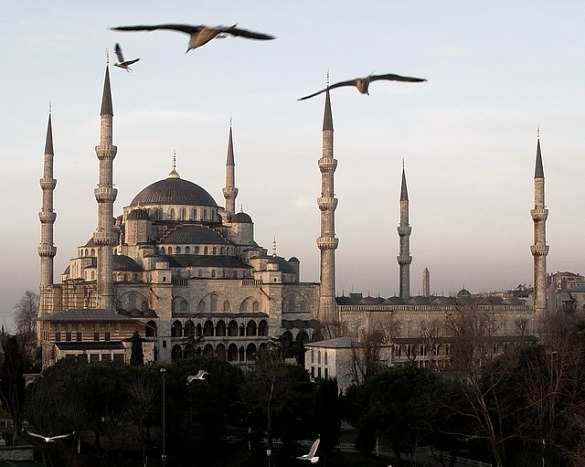
As the sun begins to sink below the horizon and the sky turns a deep blue, loud speakers attached to the minarets of mosques all around the city come to life to the blaring wails of the call to prayer. If you are standing in the right part of town you can hear these songs floating on the night air seemingly calling back and forth to each other from three or four mosques at once.

To stand in Sultanahmet Park between two of the world’s most impressive ancient mosques, the Aya Sofia and the Sultanahmet, and experience the call to prayer is an experience that will stay with you forever. These two massive buildings are at the core of Istanbul’s ancient city and are two of its most impressive places to visit. Although the Aya Sofia (also known as the Hagia Sophia) no longer does a call to prayer as it is now a museum, it is still an incredible monument. Inside you will find uncovered frescoes and converted religious symbols from its past. The monument started life as a Christian Cathedral and was then converted to a mosque before becoming a museum.

Across the plaza is the equally impressive and still operating Sultanahmet mosque, which is better known as the Blue Mosque for the blue hued tiles that cover the inside of the enormous structure. As a still active religious site, there are more rules to be followed when entering the Blue Mosque. You will be required to remove your shoes (bags are provided) and women will be asked to cover their heads (scarves are also provided). It is also recommended that you dress modestly and cover up as much as you can.

After these two religious shrines, there are several other must-see sites of Istanbul, all of which come with their own extensive history. Close behind the Aya Sofia is Topkapi Palace. Its sprawling grounds are an incredible proof of the lavish lives of Ottoman emperors, especially in the immaculately preserved harem, where the sultan’s concubines lived. Here you will also find many ornate artifacts and great examples of Ottoman architecture. These three sites all sit within a short walk of one another and are just the very beginning of the wonders of Istanbul.

Kirkpinar Oil Wrestling Festival in Edirne
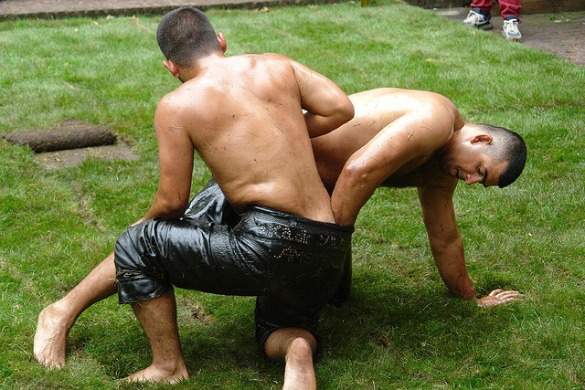
The sun beats down heavily on the backs of fifty men who take high leaps, skipping across a field of long grass, slapping their knees in the air. A thumping drum beats and shrill horns play constantly. The men, covered in a slick coating of oil and wearing only shin-length leather pants pair off and at once engage in fierce combat. The crowded stadium erupts with cheers when some of the most popular wrestlers win their bouts and slowly the field is paired down to just one match of exhausted hulking men. With its end comes the end of the first round of the heavyweight class of an ancient festival.

This is how the main event of the 648th Kirkpinar Oil Wrestling tournament kicks off. The event, the world’s longest running sporting competition, is held annually in Edirne, a small city on the European side of the country, and attracts thousands of visitors from around Turkey and Europe. This odd and historical tournament is surrounded by a festival that consumes the city for a week. On the final three days, the wrestling tournament takes place and after the final bout a head wrestler is crowned.

Seeing greased up men in leather shorts try and pin each other in a field may not be everyone’s ideal vacation, but even still, the Kirkpinar festival and tournament is a truly authentic and unique event. In addition to the wrestling tournament, which all takes place at a stadium on the edge of town, the downtown area offers music concerts, fireworks, a parade and many other activities.

The Travertine pools of Pamukkale
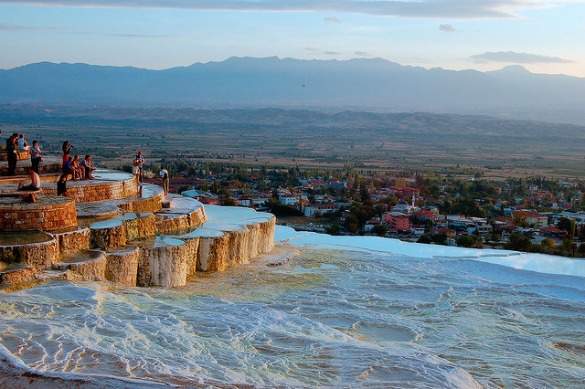
On arrival into the small town of Pamukkale, it is almost impossible to miss the town’s main attraction. Overlooking the town is the strikingly beautiful white ‘cotton castle,’ as the name means in Turkish. The attraction is made from calcium deposits that seem to flow like melting glue down a large hill towards the town. As you approach the hill and begin to climb, you see that it is in fact covered in a thick layer of white limestone that has been slowly added to over centuries as flowing water from the hot pools above deposited more and more bits of calcium.

Since becoming a UNESCO World Heritage Site in 1988, people are no longer allowed to walk over or sit in the naturally formed pools, but there are still wooden boardwalks that take you around and over some of the pools, which gives a great view without damaging the fragile site.

What adds an extra level to this already spectacular natural site is the cultural interest it also holds. Perched on top of the hill are the ruins of the ancient city of Hierapolis. Here are the impressively intact remains of many stone structures, including a huge necropolis (city of the dead) filled with carved stone sarcophagi. There is also, of course, the quintessential roman amphitheatre, and some intact streets and gates. This city drew people to it even in ancient times for the supposed healing powers in the hot baths which people can still enjoy today.

The ancient city of Ephesus
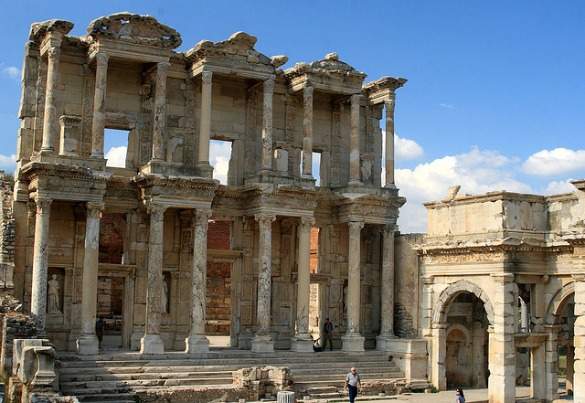
If you have ever wondered what your life would have been like if you had lived around the time of Jesus Christ and you don’t currently own a time machine, then your best bet is the ruins of the ancient city of Ephesus. It is one of the world’s best-preserved examples of an ancient city and boasts some incredible structures. The most iconic is the facade of the Roman Library of Celsus.

Whether or not you get a tour of the grounds, be sure to stick around close to closing time. At this point you can explore the city in the low light of the late afternoon virtually by yourself, at least by comparison to the hoards of tourists that can be there during the day. At this time of day, walking down the large stones that make up the ancient main road toward the dusty brown two-storey library, you feel like it could be any period in time. It would be easy to believe you were walking down the main thoroughfare of Ephesus when it was flourishing city during the height of the Roman Empire.

Between the modern town of Selçuk and Ephesus are the remains of what was once one of the Seven Wonders of the World. Now only a few pieces of foundation and a single reconstructed pillar are all that is left of the once great Temple of Artemis, which was built and destroyed and rebuilt many times between 550 BC and 391 AD. Unfortunately, most of the best artifacts from this temple now lie in the British Museum. Around Selçuk there are several other impressive things to see, especially for people of Christian faith. The ruins of what was once the massive St. John Basilica are all that surround the remains of what is believed to be Saint John the Apostle, and the House of the Virgin, a modest stone chapel, sits on the site of the house where the Virgin Mary died.

The Mediterranean Coast
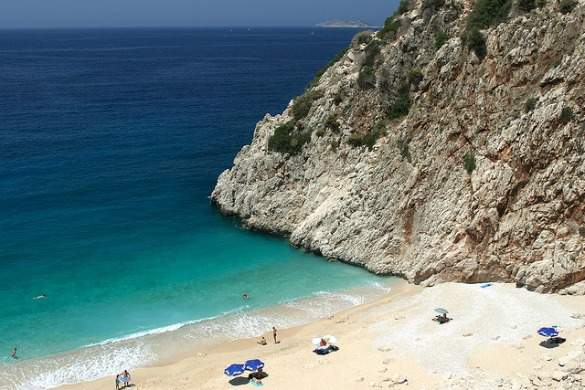
Turkey has 1577km of Mediterranean coastline, yet still isn’t always recognized as a coastal beach destination. While not on the same level as Italy or Greece when it comes to tourist infrastructure, Turkey offers the same pristine coastline and turquoise waters as more popular destinations.

A fantastic way to experience and enjoy the gorgeous Turkish Mediterranean is aboard a Turkish Gület, a wide, heavy, flat bottomed, wooden sail boat that can navigate the shallow channels along the coast because of its lack of a keel. There are dozens of options for starting and ending points for these cruises, but most will begin or end in either Bodrum, Marmaris, Fethiye or Demre.

Along the way there are many interesting and picturesque sights to see, which will be different with every boat’s itinerary. One town not to miss is Kaleköy, a tiny town clinging to the side of a rocky hill that comes right down to the water’s edge, is accessible only by boat and some small walking paths, and is crowned by the well-preserved ruins of a Byzantine stone fortress built on the top of the hill and overlooks the blue green waters of the bay.

For people looking for just a sandy beach and clear water, Ölüdeniz would be the spot. With a gorgeous white sand peninsula jutting into a secluded bay of calm blue water, this is the perfect Turkish Mediterranean beach. For those looking for beaches with a little more excitement, the tourist hotspot of Bodrum is the place to go, with packed pubs and clubs lining the beach-front streets in the summer months; this is the spot for Turks and foreign tourists to party by night and enjoy the sun and sand during the day.

Mount Nemrut
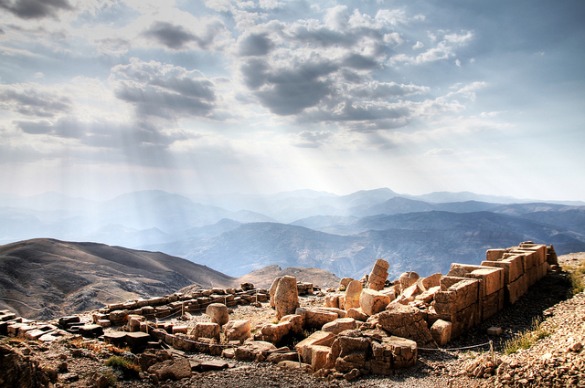
At the peak of the 2150 meter Mount Nemrut is one of the most spectacular monuments of the ancient world. On the top of the mountain sits the massive burial mound of King Antiochos I of Commagene and on this sits five seated statues on both the eastern and western faces. The eight-none meter high bodies are intact while the heads have all succumbed to the years and now lie on the ground in front, still displaying remarkable detail and craftsmanship. These statues, which are of Apollo, Tyche the Commagene god of fertility, Zeus, Antiochos I and Heracles, are joined by several smaller lion and eagle statues. This burial mound and the statue-covered terraces are considered by some to be the eighth ancient wonder of the world.

Cappadocia
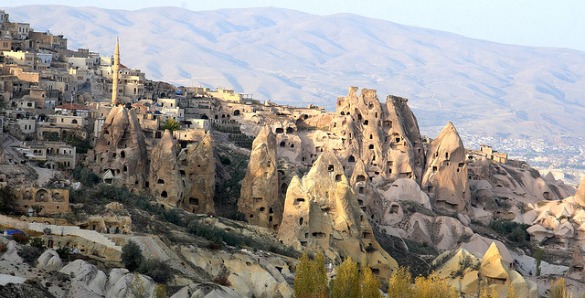
Perhaps Turkey’s most impressive and famous site outside of Istanbul is the otherworldly landscape of the region of Cappadocia.

In Cappadocia, wherever you look, even underground, there is history and creative uses of the land. Some of the best places to find this is in the underground cities, which were built to protect the locals from both the elements and persecution from the Roman Empire. Some of these extend down to eight levels underground. Only a few of the largest underground cities are available to visitors who can see the conditions up to 10,000 people would endure for up to four months. Extending high above ground are similar defenses in the form of fortresses dug into tall steep sided hills.

The easiest place to see the curious buildings dug into the landscape is at the Open Air Museum where, for a fee, you can explore a small, partially restored village filled with modest homes, and small churches covered in gorgeous frescoes. However, if you have a bit more time you can explore the trails around the town of Goreme, where you can find abandoned homes and churches scattered through the countryside.

Sümela Monastery
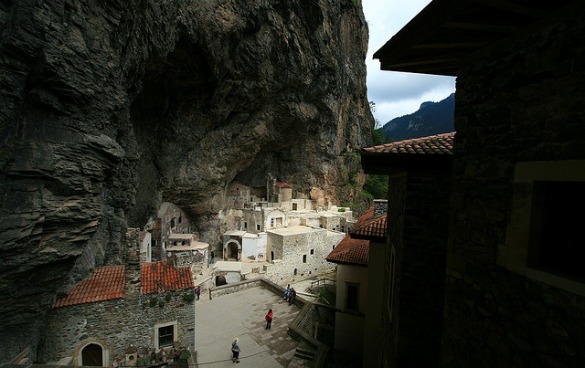
For a monastery built into the vertical rock face of a mountain hanging hundreds of meters above the valley floor, Sümela Monastery near the northeastern Black Sea coast, is surprisingly easy to access. Inside the monastery the main attraction is the high cavernous main chamber of the rock church, which has been dug directly into the mountain and is covered in colorful frescoes which date from the 18th century.

The monastery was founded in 386 AD and has undergone dozens of additions and reconstructions over the years, but took its current form during the 13th century. Outside the main monastery is a spring that is considered sacred by Orthodox Greeks and large stone arches that form an aqua-duct which supplied water to the monastery. The monastery is very accessible, as an hour long minibus ride takes you from nearby Trabzon to the mountain, followed by a short path hike to get to the building itself. Some of the most impressive views of the monastery come on some of the stops the bus makes on the way up, as this affords you an opportunity to see the monastery from a distance in its lush valley surroundings.

The Ottoman town of Safranbolu
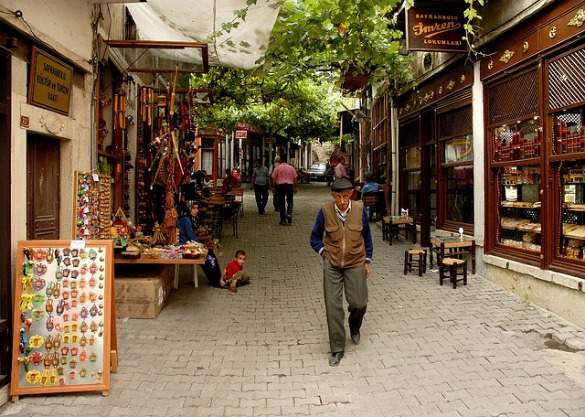
The small tourist town of Safranbolu is almost like a large working historic park. In the 1970s the town was falling into a state of disrepair and decay, but luckily for visitors, the Turkish government recognized it for the architectural and cultural gem that it is and began an extensive repair and recovery effort which culminated in the town being added to the UNESCO World Heritage list in 1994. The town has been expertly refurbished back to its former Ottoman era glory, and walking down the narrow cobblestone streets between red roofed buildings gives visitors a glimpse into Turkey’s history.

Artisans who still practice Ottoman era trades are encouraged to move into the small shops, and Ottoman food is available all over town. The town isn’t just for show though; the shops and outdoor market are also for the locals, who are very proud of the town’s history and architecture. The town provides visitors with the unique opportunity to stay in style and live like a wealthy Ottoman as many of the era’s mansions have been converted into hotels and guesthouses, some of which are very affordable.

The ghost town of Kayaköy
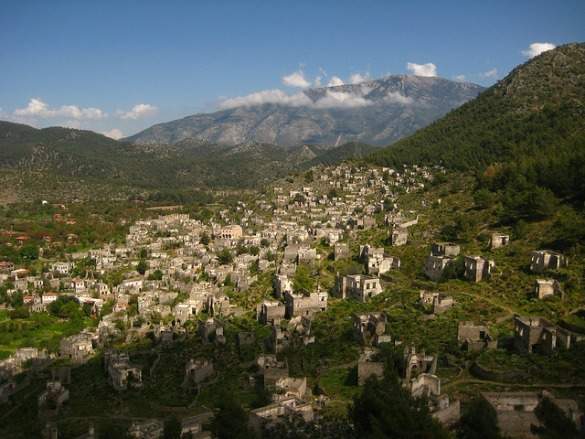
This town of 2000 to 3000 people was abandoned in 1923 after the Greco-Turkish war because of mandatory population exchanges between Greece and Turkey. There are many opinions as to why people never moved into the vacated homes, one of the more interesting being the rumours about the outgoing Greeks poisoning the town’s wells. A more practical reason is that the town’s location on the side of a hill was well suited for the craftsmen Greeks who had lived there, but was useless for the Turkish farmers of the area.

Beneath a layer of dust in the abandoned chapels of Kayaköy you will still find colourful frescoes and delicate tile work. There are very few visitors to the town to disturb the dust, so much of the time you will find yourself alone wandering through crumbling and roofless stone cottages and cracked empty churches for hours. Even by the road at the bottom of the hillside town there are only a few vendors and restaurants to take away from the ambiance of the eerie ghost town.

The true wonder of the ghost town is just in walking its dirt paths and overgrown stone staircases to see a frozen tableaux of a different time, just left to be reclaimed by nature. There are still many visible artifacts left of the Greek culture which once thrived in the town. The bits of colorful paint, intricate stone work and crumbling frescoes are in constant danger from the elements and local looters who remove and sell the town’s artifacts.

Ten Experiences Not to Miss in Turkey

Turkey is a land that is so varied and in constant contrast with itself that it can be hard to ever truly understand, but to get a start there are many sites that can give a flavor of the country’s unique mix of history, culture and natural wonders. In traversing this country from west to east the traveler will see astonishing differences in cultures and ways of life. From the modern, cosmopolitan capital to the eastern outposts of Sanliurfa and Van there is a world of difference. Even the otherworldly natural sites are still filled with remnants of human history and are so diverse it is hard to believe they all fit in one country.

The ancient treasures of Istanbul

As the sun begins to sink below the horizon and the sky turns a deep blue, loud speakers attached to the minarets of mosques all around the city come to life to the blaring wails of the call to prayer. If you are standing in the right part of town you can hear these songs floating on the night air seemingly calling back and forth to each other from three or four mosques at once.

To stand in Sultanahmet Park between two of the world’s most impressive ancient mosques, the Aya Sofia and the Sultanahmet, and experience the call to prayer is an experience that will stay with you forever. These two massive buildings are at the core of Istanbul’s ancient city and are two of its most impressive places to visit. Although the Aya Sofia (also known as the Hagia Sophia) no longer does a call to prayer as it is now a museum, it is still an incredible monument. Inside you will find uncovered frescoes and converted religious symbols from its past. The monument started life as a Christian Cathedral and was then converted to a mosque before becoming a museum.

Across the plaza is the equally impressive and still operating Sultanahmet mosque, which is better known as the Blue Mosque for the blue hued tiles that cover the inside of the enormous structure. As a still active religious site, there are more rules to be followed when entering the Blue Mosque. You will be required to remove your shoes (bags are provided) and women will be asked to cover their heads (scarves are also provided). It is also recommended that you dress modestly and cover up as much as you can.

After these two religious shrines, there are several other must-see sites of Istanbul, all of which come with their own extensive history. Close behind the Aya Sofia is Topkapi Palace. Its sprawling grounds are an incredible proof of the lavish lives of Ottoman emperors, especially in the immaculately preserved harem, where the sultan’s concubines lived. Here you will also find many ornate artifacts and great examples of Ottoman architecture. These three sites all sit within a short walk of one another and are just the very beginning of the wonders of Istanbul.

Kirkpinar Oil Wrestling Festival in Edirne

The sun beats down heavily on the backs of fifty men who take high leaps, skipping across a field of long grass, slapping their knees in the air. A thumping drum beats and shrill horns play constantly. The men, covered in a slick coating of oil and wearing only shin-length leather pants pair off and at once engage in fierce combat. The crowded stadium erupts with cheers when some of the most popular wrestlers win their bouts and slowly the field is paired down to just one match of exhausted hulking men. With its end comes the end of the first round of the heavyweight class of an ancient festival.

This is how the main event of the 648th Kirkpinar Oil Wrestling tournament kicks off. The event, the world’s longest running sporting competition, is held annually in Edirne, a small city on the European side of the country, and attracts thousands of visitors from around Turkey and Europe. This odd and historical tournament is surrounded by a festival that consumes the city for a week. On the final three days, the wrestling tournament takes place and after the final bout a head wrestler is crowned.

Seeing greased up men in leather shorts try and pin each other in a field may not be everyone’s ideal vacation, but even still, the Kirkpinar festival and tournament is a truly authentic and unique event. In addition to the wrestling tournament, which all takes place at a stadium on the edge of town, the downtown area offers music concerts, fireworks, a parade and many other activities.

The Travertine pools of Pamukkale

On arrival into the small town of Pamukkale, it is almost impossible to miss the town’s main attraction. Overlooking the town is the strikingly beautiful white ‘cotton castle,’ as the name means in Turkish. The attraction is made from calcium deposits that seem to flow like melting glue down a large hill towards the town. As you approach the hill and begin to climb, you see that it is in fact covered in a thick layer of white limestone that has been slowly added to over centuries as flowing water from the hot pools above deposited more and more bits of calcium.

Since becoming a UNESCO World Heritage Site in 1988, people are no longer allowed to walk over or sit in the naturally formed pools, but there are still wooden boardwalks that take you around and over some of the pools, which gives a great view without damaging the fragile site.

What adds an extra level to this already spectacular natural site is the cultural interest it also holds. Perched on top of the hill are the ruins of the ancient city of Hierapolis. Here are the impressively intact remains of many stone structures, including a huge necropolis (city of the dead) filled with carved stone sarcophagi. There is also, of course, the quintessential roman amphitheatre, and some intact streets and gates. This city drew people to it even in ancient times for the supposed healing powers in the hot baths which people can still enjoy today.

The ancient city of Ephesus

If you have ever wondered what your life would have been like if you had lived around the time of Jesus Christ and you don’t currently own a time machine, then your best bet is the ruins of the ancient city of Ephesus. It is one of the world’s best-preserved examples of an ancient city and boasts some incredible structures. The most iconic is the facade of the Roman Library of Celsus.

Whether or not you get a tour of the grounds, be sure to stick around close to closing time. At this point you can explore the city in the low light of the late afternoon virtually by yourself, at least by comparison to the hoards of tourists that can be there during the day. At this time of day, walking down the large stones that make up the ancient main road toward the dusty brown two-storey library, you feel like it could be any period in time. It would be easy to believe you were walking down the main thoroughfare of Ephesus when it was flourishing city during the height of the Roman Empire.

Between the modern town of Selçuk and Ephesus are the remains of what was once one of the Seven Wonders of the World. Now only a few pieces of foundation and a single reconstructed pillar are all that is left of the once great Temple of Artemis, which was built and destroyed and rebuilt many times between 550 BC and 391 AD. Unfortunately, most of the best artifacts from this temple now lie in the British Museum. Around Selçuk there are several other impressive things to see, especially for people of Christian faith. The ruins of what was once the massive St. John Basilica are all that surround the remains of what is believed to be Saint John the Apostle, and the House of the Virgin, a modest stone chapel, sits on the site of the house where the Virgin Mary died.

The Mediterranean Coast

Turkey has 1577km of Mediterranean coastline, yet still isn’t always recognized as a coastal beach destination. While not on the same level as Italy or Greece when it comes to tourist infrastructure, Turkey offers the same pristine coastline and turquoise waters as more popular destinations.

A fantastic way to experience and enjoy the gorgeous Turkish Mediterranean is aboard a Turkish Gület, a wide, heavy, flat bottomed, wooden sail boat that can navigate the shallow channels along the coast because of its lack of a keel. There are dozens of options for starting and ending points for these cruises, but most will begin or end in either Bodrum, Marmaris, Fethiye or Demre.

Along the way there are many interesting and picturesque sights to see, which will be different with every boat’s itinerary. One town not to miss is Kaleköy, a tiny town clinging to the side of a rocky hill that comes right down to the water’s edge, is accessible only by boat and some small walking paths, and is crowned by the well-preserved ruins of a Byzantine stone fortress built on the top of the hill and overlooks the blue green waters of the bay.

For people looking for just a sandy beach and clear water, Ölüdeniz would be the spot. With a gorgeous white sand peninsula jutting into a secluded bay of calm blue water, this is the perfect Turkish Mediterranean beach. For those looking for beaches with a little more excitement, the tourist hotspot of Bodrum is the place to go, with packed pubs and clubs lining the beach-front streets in the summer months; this is the spot for Turks and foreign tourists to party by night and enjoy the sun and sand during the day.

Mount Nemrut

At the peak of the 2150 meter Mount Nemrut is one of the most spectacular monuments of the ancient world. On the top of the mountain sits the massive burial mound of King Antiochos I of Commagene and on this sits five seated statues on both the eastern and western faces. The eight-none meter high bodies are intact while the heads have all succumbed to the years and now lie on the ground in front, still displaying remarkable detail and craftsmanship. These statues, which are of Apollo, Tyche the Commagene god of fertility, Zeus, Antiochos I and Heracles, are joined by several smaller lion and eagle statues. This burial mound and the statue-covered terraces are considered by some to be the eighth ancient wonder of the world.

Cappadocia

Perhaps Turkey’s most impressive and famous site outside of Istanbul is the otherworldly landscape of the region of Cappadocia.

In Cappadocia, wherever you look, even underground, there is history and creative uses of the land. Some of the best places to find this is in the underground cities, which were built to protect the locals from both the elements and persecution from the Roman Empire. Some of these extend down to eight levels underground. Only a few of the largest underground cities are available to visitors who can see the conditions up to 10,000 people would endure for up to four months. Extending high above ground are similar defenses in the form of fortresses dug into tall steep sided hills.

The easiest place to see the curious buildings dug into the landscape is at the Open Air Museum where, for a fee, you can explore a small, partially restored village filled with modest homes, and small churches covered in gorgeous frescoes. However, if you have a bit more time you can explore the trails around the town of Goreme, where you can find abandoned homes and churches scattered through the countryside.

Sümela Monastery

For a monastery built into the vertical rock face of a mountain hanging hundreds of meters above the valley floor, Sümela Monastery near the northeastern Black Sea coast, is surprisingly easy to access. Inside the monastery the main attraction is the high cavernous main chamber of the rock church, which has been dug directly into the mountain and is covered in colorful frescoes which date from the 18th century.

The monastery was founded in 386 AD and has undergone dozens of additions and reconstructions over the years, but took its current form during the 13th century. Outside the main monastery is a spring that is considered sacred by Orthodox Greeks and large stone arches that form an aqua-duct which supplied water to the monastery. The monastery is very accessible, as an hour long minibus ride takes you from nearby Trabzon to the mountain, followed by a short path hike to get to the building itself. Some of the most impressive views of the monastery come on some of the stops the bus makes on the way up, as this affords you an opportunity to see the monastery from a distance in its lush valley surroundings.

The Ottoman town of Safranbolu

The small tourist town of Safranbolu is almost like a large working historic park. In the 1970s the town was falling into a state of disrepair and decay, but luckily for visitors, the Turkish government recognized it for the architectural and cultural gem that it is and began an extensive repair and recovery effort which culminated in the town being added to the UNESCO World Heritage list in 1994. The town has been expertly refurbished back to its former Ottoman era glory, and walking down the narrow cobblestone streets between red roofed buildings gives visitors a glimpse into Turkey’s history.

Artisans who still practice Ottoman era trades are encouraged to move into the small shops, and Ottoman food is available all over town. The town isn’t just for show though; the shops and outdoor market are also for the locals, who are very proud of the town’s history and architecture. The town provides visitors with the unique opportunity to stay in style and live like a wealthy Ottoman as many of the era’s mansions have been converted into hotels and guesthouses, some of which are very affordable.

The ghost town of Kayaköy

This town of 2000 to 3000 people was abandoned in 1923 after the Greco-Turkish war because of mandatory population exchanges between Greece and Turkey. There are many opinions as to why people never moved into the vacated homes, one of the more interesting being the rumours about the outgoing Greeks poisoning the town’s wells. A more practical reason is that the town’s location on the side of a hill was well suited for the craftsmen Greeks who had lived there, but was useless for the Turkish farmers of the area.

Beneath a layer of dust in the abandoned chapels of Kayaköy you will still find colourful frescoes and delicate tile work. There are very few visitors to the town to disturb the dust, so much of the time you will find yourself alone wandering through crumbling and roofless stone cottages and cracked empty churches for hours. Even by the road at the bottom of the hillside town there are only a few vendors and restaurants to take away from the ambiance of the eerie ghost town.

The true wonder of the ghost town is just in walking its dirt paths and overgrown stone staircases to see a frozen tableaux of a different time, just left to be reclaimed by nature. There are still many visible artifacts left of the Greek culture which once thrived in the town. The bits of colorful paint, intricate stone work and crumbling frescoes are in constant danger from the elements and local looters who remove and sell the town’s artifacts.

Pretty Venice: Land of Canals and Churches

Filled with attractive and beautiful monuments, Venice is one of the most important cities of Italy and of course, one of the most famous tourist destinations the world over. Its history dates back to more than 1,500 years old connecting about 117 islands with about 150 canals, around 400 bridges and innumerable ancient pavements and landmarks that still attract visitors in hordes. For those looking for a place that offers interesting towns, beautiful Gothic architecture, delicious Italian cuisine and of course most venerated and spectacular churches then, Venice is the place to go.

St. Mark’s Basilica (Basilica San Marco)

Cathedral of Venice

Cathedral of Venice

(Via)

It is one of the most famous sights in Venice dedicated to St. Mark in the 9th century. The church is a real masterpiece with beautiful carvings and statutes with five large domes. For those interested in having a view from the roof, a lift takes you up from where you can get a beautiful view above the lagoons and rooftops.

The Grand Canal

Grand Canal - Connecting the city

The Grand Canal - Connecting the City

(Via)

The heart of Venice lies in the Grand Canal that is actually a long stretch of water running throughout the city. It is also referred to as ‘the most beautiful street in the whole of Venice.’

Rialto Bridge

Rialto Bridge - The first bridge built atop the Grand Canal

Rialto Bridge - The first bridge built atop the Grand Canal

(Via)

The Rialto Bridge was the first stone bridge to replace the earlier wooden bridge on the Grand Canal and was constructed by Anotnio da Ponte (Anthony of the Bridge). It is one of the cities most famous bridges with the commercial hub operating right from there. The surrounding area is bustling with activity especially the ever popular fruit and vegetable market apart from the Fondaco dei Tedeschi or the central post office.

Doge’s Palace (Palazzo Ducale)

Doge’s Palace (Palazzo Ducale)

Doge’s Palace (Palazzo Ducale)

(Via)

Situated just next to St. Basilica, it is a must see in Venice. It is one of the finest examples of Gothic architecture with the waterfront view simply splendid. Constructed initially as a fortress in the 9th century, the building now includes the Scala d’Oro that is a huge ceremonial staircase and the Sala del Maggior Consiglio that is actually a Grand Council Chamber. Many paintings are also on display so a tour of this place is a must as it serves as a memorable museum of sorts.

Things to do

The first thing that you need to do here in Venice is to take a Grand Canal tour on a ‘vaporetti’ or water bus. It will surely be one of the most romantic and beautiful rides that you ever had.

Visit St. Mark’s Square or the Piazza San Marco which is a popular tourist attraction with cafes, live music and the general busy life dominant here. The Square is surrounded by beautiful buildings on all three sides making the visit all the more worthwhile.

Watch a glass blowing demonstration or glass sculpture on Murano Island.

Visit Burano Island filled with brightly colored buildings.

Take a hike on Torcello Island to see a nature reserve and beautiful scenery.

How to get there

The Venice Marco Polo Airport serves a number of domestic and international flights. Getting around in Venice is easy with sights within walking distance. While walking is a good way to find your way around (with a map of course), water buses, water taxis, gondolas are the most common means of getting around in the city. Of course, regular taxis, buses and trains are also available, but the heart of the city is by water travel.

Pretty Venice: Land of Canals and Churches

Filled with attractive and beautiful monuments, Venice is one of the most important cities of Italy and of course, one of the most famous tourist destinations the world over. Its history dates back to more than 1,500 years old connecting about 117 islands with about 150 canals, around 400 bridges and innumerable ancient pavements and landmarks that still attract visitors in hordes. For those looking for a place that offers interesting towns, beautiful Gothic architecture, delicious Italian cuisine and of course most venerated and spectacular churches then, Venice is the place to go.

St. Mark’s Basilica (Basilica San Marco)

Cathedral of Venice

Cathedral of Venice

(Via)

It is one of the most famous sights in Venice dedicated to St. Mark in the 9th century. The church is a real masterpiece with beautiful carvings and statutes with five large domes. For those interested in having a view from the roof, a lift takes you up from where you can get a beautiful view above the lagoons and rooftops.

The Grand Canal

Grand Canal - Connecting the city

The Grand Canal - Connecting the City

(Via)

The heart of Venice lies in the Grand Canal that is actually a long stretch of water running throughout the city. It is also referred to as ‘the most beautiful street in the whole of Venice.’

Rialto Bridge

Rialto Bridge - The first bridge built atop the Grand Canal

Rialto Bridge - The first bridge built atop the Grand Canal

(Via)

The Rialto Bridge was the first stone bridge to replace the earlier wooden bridge on the Grand Canal and was constructed by Anotnio da Ponte (Anthony of the Bridge). It is one of the cities most famous bridges with the commercial hub operating right from there. The surrounding area is bustling with activity especially the ever popular fruit and vegetable market apart from the Fondaco dei Tedeschi or the central post office.

Doge’s Palace (Palazzo Ducale)

Doge’s Palace (Palazzo Ducale)

Doge’s Palace (Palazzo Ducale)

(Via)

Situated just next to St. Basilica, it is a must see in Venice. It is one of the finest examples of Gothic architecture with the waterfront view simply splendid. Constructed initially as a fortress in the 9th century, the building now includes the Scala d’Oro that is a huge ceremonial staircase and the Sala del Maggior Consiglio that is actually a Grand Council Chamber. Many paintings are also on display so a tour of this place is a must as it serves as a memorable museum of sorts.

Things to do

The first thing that you need to do here in Venice is to take a Grand Canal tour on a ‘vaporetti’ or water bus. It will surely be one of the most romantic and beautiful rides that you ever had.

Visit St. Mark’s Square or the Piazza San Marco which is a popular tourist attraction with cafes, live music and the general busy life dominant here. The Square is surrounded by beautiful buildings on all three sides making the visit all the more worthwhile.

Watch a glass blowing demonstration or glass sculpture on Murano Island.

Visit Burano Island filled with brightly colored buildings.

Take a hike on Torcello Island to see a nature reserve and beautiful scenery.

How to get there

The Venice Marco Polo Airport serves a number of domestic and international flights. Getting around in Venice is easy with sights within walking distance. While walking is a good way to find your way around (with a map of course), water buses, water taxis, gondolas are the most common means of getting around in the city. Of course, regular taxis, buses and trains are also available, but the heart of the city is by water travel.

The Swiss Connection in Switzerland

The Land of the Alps, Switzerland is one of the most famous tourist destinations in the entire world. It is bordered by countries like Germany, France, Austria and Italy and offers some of the most panoramic views giving you ample opportunities to ski, fish, hunt and do some boating. No wonder, people rush to Switzerland for a grand holiday, with many movies shooting some of their best shots here. It is also one of the richest countries in the world with numerous people having Swiss accounts. There is plenty that you can see in Switzerland so you need to plan your visit beforehand. Here are some of the places you just cannot not miss.

Chillon Castle

Chillon Castle

Chillon Castle

It is one of the most famous castles in Switzerland located on the shore of Lake Geneva. It has around 100 buildings and all date way back to the 11th century related to the Savoy nobility.

Piz Gloria atop Schilthorn Mountain

Piz Gloria atop Schilthorn Mountain

Piz Gloria

(Via)

2970 m above sea level

The Piz Gloria is a revolving restaurant atop the Schilthorn Mountain in the Swiss Alps. Apart from its unique location and structure, it is well known for having been used as the shooting site for one of James Bond’s movies, ‘On Her Majesty’s Service.’ The restaurant gives you a 360 degree view of the entire place even as you dine. It is definitely, one of the most spectacular sights in Switzerland.

Chalet in Switzerland

Chalet in Switzerland

Chalet

No stay or visit in Switzerland is complete if you haven’t stayed in a chalet which is a traditional wooden house. It makes you feel very cozy and comfortable.

Geneva Jet D’eau

Geneva Jet D’eau, Tallest fountain in the world

Geneva Jet D’eau

Considered as a symbol of the land, the fountain is located in the heart of one of the main cities in Switzerland and projects water as high as 140 meters.

What not to miss out on in Switzerland

Mountain sports are one of the most popular pastimes in Switzerland. So, don’t miss out ice climbing, ski touring, glacier walking and snowboarding.

Do take a ride in one of the world’s highest aerial cable cars up the Little Matterhorn at Zermatt.

Enjoy some of the country’s street parades or theatre performances.

Go lake cruising or ferrying on lakes like Lake Zurich, Lake Geneva, or Lake Constance.

Travel by the Glacier Express, one of Europe’s greatest rail journeys.

Traveling in Switzerland

Traveling in Switzerland is one of the smoothest and comfortable things that you will ever experience here. The public transport is clean, clear and punctual. You can get discount options on tickets for buses, trains or bike rentals. Driving by car is also one of the best ways to explore the country.

Currency

All ATMs accept foreign cards so getting cash is no problem. Although Switzerland is not part of the European Union, almost all public places like restaurants, supermarkets and the like accept Euro. Of course, the currency basically used here is the Swiss franc.

Best Known Products

If you are here in Switzerland how can you not have a look or purchase some of the world’s best known Swiss watches (Rolex, Omega), the famous Swiss chocolates (Nestle is a Swiss company by the way), the delicious Swiss cheese and of course the impressive Swiss knives!

The Swiss Connection in Switzerland

The Land of the Alps, Switzerland is one of the most famous tourist destinations in the entire world. It is bordered by countries like Germany, France, Austria and Italy and offers some of the most panoramic views giving you ample opportunities to ski, fish, hunt and do some boating. No wonder, people rush to Switzerland for a grand holiday, with many movies shooting some of their best shots here. It is also one of the richest countries in the world with numerous people having Swiss accounts. There is plenty that you can see in Switzerland so you need to plan your visit beforehand. Here are some of the places you just cannot not miss.

Chillon Castle

Chillon Castle

Chillon Castle

It is one of the most famous castles in Switzerland located on the shore of Lake Geneva. It has around 100 buildings and all date way back to the 11th century related to the Savoy nobility.

Piz Gloria atop Schilthorn Mountain

Piz Gloria atop Schilthorn Mountain

Piz Gloria

(Via)

2970 m above sea level

The Piz Gloria is a revolving restaurant atop the Schilthorn Mountain in the Swiss Alps. Apart from its unique location and structure, it is well known for having been used as the shooting site for one of James Bond’s movies, ‘On Her Majesty’s Service.’ The restaurant gives you a 360 degree view of the entire place even as you dine. It is definitely, one of the most spectacular sights in Switzerland.

Chalet in Switzerland

Chalet in Switzerland

Chalet

No stay or visit in Switzerland is complete if you haven’t stayed in a chalet which is a traditional wooden house. It makes you feel very cozy and comfortable.

Geneva Jet D’eau

Geneva Jet D’eau, Tallest fountain in the world

Geneva Jet D’eau

Considered as a symbol of the land, the fountain is located in the heart of one of the main cities in Switzerland and projects water as high as 140 meters.

What not to miss out on in Switzerland

Mountain sports are one of the most popular pastimes in Switzerland. So, don’t miss out ice climbing, ski touring, glacier walking and snowboarding.

Do take a ride in one of the world’s highest aerial cable cars up the Little Matterhorn at Zermatt.

Enjoy some of the country’s street parades or theatre performances.

Go lake cruising or ferrying on lakes like Lake Zurich, Lake Geneva, or Lake Constance.

Travel by the Glacier Express, one of Europe’s greatest rail journeys.

Traveling in Switzerland

Traveling in Switzerland is one of the smoothest and comfortable things that you will ever experience here. The public transport is clean, clear and punctual. You can get discount options on tickets for buses, trains or bike rentals. Driving by car is also one of the best ways to explore the country.

Currency

All ATMs accept foreign cards so getting cash is no problem. Although Switzerland is not part of the European Union, almost all public places like restaurants, supermarkets and the like accept Euro. Of course, the currency basically used here is the Swiss franc.

Best Known Products

If you are here in Switzerland how can you not have a look or purchase some of the world’s best known Swiss watches (Rolex, Omega), the famous Swiss chocolates (Nestle is a Swiss company by the way), the delicious Swiss cheese and of course the impressive Swiss knives!

Ten Experiences Not to Miss in Turkey

Turkey is a land that is so varied and in constant contrast with itself that it can be hard to ever truly understand, but to get a start there are many sites that can give a flavor of the country’s unique mix of history, culture and natural wonders. In traversing this country from west to east the traveler will see astonishing differences in cultures and ways of life. From the modern, cosmopolitan capital to the eastern outposts of Sanliurfa and Van there is a world of difference. Even the otherworldly natural sites are still filled with remnants of human history and are so diverse it is hard to believe they all fit in one country.

The ancient treasures of Istanbul

As the sun begins to sink below the horizon and the sky turns a deep blue, loud speakers attached to the minarets of mosques all around the city come to life to the blaring wails of the call to prayer. If you are standing in the right part of town you can hear these songs floating on the night air seemingly calling back and forth to each other from three or four mosques at once.

To stand in Sultanahmet Park between two of the world’s most impressive ancient mosques, the Aya Sofia and the Sultanahmet, and experience the call to prayer is an experience that will stay with you forever. These two massive buildings are at the core of Istanbul’s ancient city and are two of its most impressive places to visit. Although the Aya Sofia (also known as the Hagia Sophia) no longer does a call to prayer as it is now a museum, it is still an incredible monument. Inside you will find uncovered frescoes and converted religious symbols from its past. The monument started life as a Christian Cathedral and was then converted to a mosque before becoming a museum.

Across the plaza is the equally impressive and still operating Sultanahmet mosque, which is better known as the Blue Mosque for the blue hued tiles that cover the inside of the enormous structure. As a still active religious site, there are more rules to be followed when entering the Blue Mosque. You will be required to remove your shoes (bags are provided) and women will be asked to cover their heads (scarves are also provided). It is also recommended that you dress modestly and cover up as much as you can.

After these two religious shrines, there are several other must-see sites of Istanbul, all of which come with their own extensive history. Close behind the Aya Sofia is Topkapi Palace. Its sprawling grounds are an incredible proof of the lavish lives of Ottoman emperors, especially in the immaculately preserved harem, where the sultan’s concubines lived. Here you will also find many ornate artifacts and great examples of Ottoman architecture. These three sites all sit within a short walk of one another and are just the very beginning of the wonders of Istanbul.

Kirkpinar Oil Wrestling Festival in Edirne

The sun beats down heavily on the backs of fifty men who take high leaps, skipping across a field of long grass, slapping their knees in the air. A thumping drum beats and shrill horns play constantly. The men, covered in a slick coating of oil and wearing only shin-length leather pants pair off and at once engage in fierce combat. The crowded stadium erupts with cheers when some of the most popular wrestlers win their bouts and slowly the field is paired down to just one match of exhausted hulking men. With its end comes the end of the first round of the heavyweight class of an ancient festival.

This is how the main event of the 648th Kirkpinar Oil Wrestling tournament kicks off. The event, the world’s longest running sporting competition, is held annually in Edirne, a small city on the European side of the country, and attracts thousands of visitors from around Turkey and Europe. This odd and historical tournament is surrounded by a festival that consumes the city for a week. On the final three days, the wrestling tournament takes place and after the final bout a head wrestler is crowned.

Seeing greased up men in leather shorts try and pin each other in a field may not be everyone’s ideal vacation, but even still, the Kirkpinar festival and tournament is a truly authentic and unique event. In addition to the wrestling tournament, which all takes place at a stadium on the edge of town, the downtown area offers music concerts, fireworks, a parade and many other activities.

The Travertine pools of Pamukkale

On arrival into the small town of Pamukkale, it is almost impossible to miss the town’s main attraction. Overlooking the town is the strikingly beautiful white ‘cotton castle,’ as the name means in Turkish. The attraction is made from calcium deposits that seem to flow like melting glue down a large hill towards the town. As you approach the hill and begin to climb, you see that it is in fact covered in a thick layer of white limestone that has been slowly added to over centuries as flowing water from the hot pools above deposited more and more bits of calcium.

Since becoming a UNESCO World Heritage Site in 1988, people are no longer allowed to walk over or sit in the naturally formed pools, but there are still wooden boardwalks that take you around and over some of the pools, which gives a great view without damaging the fragile site.

What adds an extra level to this already spectacular natural site is the cultural interest it also holds. Perched on top of the hill are the ruins of the ancient city of Hierapolis. Here are the impressively intact remains of many stone structures, including a huge necropolis (city of the dead) filled with carved stone sarcophagi. There is also, of course, the quintessential roman amphitheatre, and some intact streets and gates. This city drew people to it even in ancient times for the supposed healing powers in the hot baths which people can still enjoy today.

The ancient city of Ephesus

If you have ever wondered what your life would have been like if you had lived around the time of Jesus Christ and you don’t currently own a time machine, then your best bet is the ruins of the ancient city of Ephesus. It is one of the world’s best-preserved examples of an ancient city and boasts some incredible structures. The most iconic is the facade of the Roman Library of Celsus.

Whether or not you get a tour of the grounds, be sure to stick around close to closing time. At this point you can explore the city in the low light of the late afternoon virtually by yourself, at least by comparison to the hoards of tourists that can be there during the day. At this time of day, walking down the large stones that make up the ancient main road toward the dusty brown two-storey library, you feel like it could be any period in time. It would be easy to believe you were walking down the main thoroughfare of Ephesus when it was flourishing city during the height of the Roman Empire.

Between the modern town of Selçuk and Ephesus are the remains of what was once one of the Seven Wonders of the World. Now only a few pieces of foundation and a single reconstructed pillar are all that is left of the once great Temple of Artemis, which was built and destroyed and rebuilt many times between 550 BC and 391 AD. Unfortunately, most of the best artifacts from this temple now lie in the British Museum. Around Selçuk there are several other impressive things to see, especially for people of Christian faith. The ruins of what was once the massive St. John Basilica are all that surround the remains of what is believed to be Saint John the Apostle, and the House of the Virgin, a modest stone chapel, sits on the site of the house where the Virgin Mary died.

The Mediterranean Coast

Turkey has 1577km of Mediterranean coastline, yet still isn’t always recognized as a coastal beach destination. While not on the same level as Italy or Greece when it comes to tourist infrastructure, Turkey offers the same pristine coastline and turquoise waters as more popular destinations.

A fantastic way to experience and enjoy the gorgeous Turkish Mediterranean is aboard a Turkish Gület, a wide, heavy, flat bottomed, wooden sail boat that can navigate the shallow channels along the coast because of its lack of a keel. There are dozens of options for starting and ending points for these cruises, but most will begin or end in either Bodrum, Marmaris, Fethiye or Demre.

Along the way there are many interesting and picturesque sights to see, which will be different with every boat’s itinerary. One town not to miss is Kaleköy, a tiny town clinging to the side of a rocky hill that comes right down to the water’s edge, is accessible only by boat and some small walking paths, and is crowned by the well-preserved ruins of a Byzantine stone fortress built on the top of the hill and overlooks the blue green waters of the bay.

For people looking for just a sandy beach and clear water, Ölüdeniz would be the spot. With a gorgeous white sand peninsula jutting into a secluded bay of calm blue water, this is the perfect Turkish Mediterranean beach. For those looking for beaches with a little more excitement, the tourist hotspot of Bodrum is the place to go, with packed pubs and clubs lining the beach-front streets in the summer months; this is the spot for Turks and foreign tourists to party by night and enjoy the sun and sand during the day.

Mount Nemrut

At the peak of the 2150 meter Mount Nemrut is one of the most spectacular monuments of the ancient world. On the top of the mountain sits the massive burial mound of King Antiochos I of Commagene and on this sits five seated statues on both the eastern and western faces. The eight-none meter high bodies are intact while the heads have all succumbed to the years and now lie on the ground in front, still displaying remarkable detail and craftsmanship. These statues, which are of Apollo, Tyche the Commagene god of fertility, Zeus, Antiochos I and Heracles, are joined by several smaller lion and eagle statues. This burial mound and the statue-covered terraces are considered by some to be the eighth ancient wonder of the world.

Cappadocia

Perhaps Turkey’s most impressive and famous site outside of Istanbul is the otherworldly landscape of the region of Cappadocia.

In Cappadocia, wherever you look, even underground, there is history and creative uses of the land. Some of the best places to find this is in the underground cities, which were built to protect the locals from both the elements and persecution from the Roman Empire. Some of these extend down to eight levels underground. Only a few of the largest underground cities are available to visitors who can see the conditions up to 10,000 people would endure for up to four months. Extending high above ground are similar defenses in the form of fortresses dug into tall steep sided hills.

The easiest place to see the curious buildings dug into the landscape is at the Open Air Museum where, for a fee, you can explore a small, partially restored village filled with modest homes, and small churches covered in gorgeous frescoes. However, if you have a bit more time you can explore the trails around the town of Goreme, where you can find abandoned homes and churches scattered through the countryside.

Sümela Monastery

For a monastery built into the vertical rock face of a mountain hanging hundreds of meters above the valley floor, Sümela Monastery near the northeastern Black Sea coast, is surprisingly easy to access. Inside the monastery the main attraction is the high cavernous main chamber of the rock church, which has been dug directly into the mountain and is covered in colorful frescoes which date from the 18th century.

The monastery was founded in 386 AD and has undergone dozens of additions and reconstructions over the years, but took its current form during the 13th century. Outside the main monastery is a spring that is considered sacred by Orthodox Greeks and large stone arches that form an aqua-duct which supplied water to the monastery. The monastery is very accessible, as an hour long minibus ride takes you from nearby Trabzon to the mountain, followed by a short path hike to get to the building itself. Some of the most impressive views of the monastery come on some of the stops the bus makes on the way up, as this affords you an opportunity to see the monastery from a distance in its lush valley surroundings.

The Ottoman town of Safranbolu

The small tourist town of Safranbolu is almost like a large working historic park. In the 1970s the town was falling into a state of disrepair and decay, but luckily for visitors, the Turkish government recognized it for the architectural and cultural gem that it is and began an extensive repair and recovery effort which culminated in the town being added to the UNESCO World Heritage list in 1994. The town has been expertly refurbished back to its former Ottoman era glory, and walking down the narrow cobblestone streets between red roofed buildings gives visitors a glimpse into Turkey’s history.

Artisans who still practice Ottoman era trades are encouraged to move into the small shops, and Ottoman food is available all over town. The town isn’t just for show though; the shops and outdoor market are also for the locals, who are very proud of the town’s history and architecture. The town provides visitors with the unique opportunity to stay in style and live like a wealthy Ottoman as many of the era’s mansions have been converted into hotels and guesthouses, some of which are very affordable.

The ghost town of Kayaköy

This town of 2000 to 3000 people was abandoned in 1923 after the Greco-Turkish war because of mandatory population exchanges between Greece and Turkey. There are many opinions as to why people never moved into the vacated homes, one of the more interesting being the rumours about the outgoing Greeks poisoning the town’s wells. A more practical reason is that the town’s location on the side of a hill was well suited for the craftsmen Greeks who had lived there, but was useless for the Turkish farmers of the area.

Beneath a layer of dust in the abandoned chapels of Kayaköy you will still find colourful frescoes and delicate tile work. There are very few visitors to the town to disturb the dust, so much of the time you will find yourself alone wandering through crumbling and roofless stone cottages and cracked empty churches for hours. Even by the road at the bottom of the hillside town there are only a few vendors and restaurants to take away from the ambiance of the eerie ghost town.

The true wonder of the ghost town is just in walking its dirt paths and overgrown stone staircases to see a frozen tableaux of a different time, just left to be reclaimed by nature. There are still many visible artifacts left of the Greek culture which once thrived in the town. The bits of colorful paint, intricate stone work and crumbling frescoes are in constant danger from the elements and local looters who remove and sell the town’s artifacts.

Dashing Denmark - A Scandinavian Paradise

Denmark stands out as a tourist destination because of its popular tourist attractions in the form of medieval castles, Viking ruins and the rich rural countryside. It is also the land of Hans Christian Andersen and Hamlet, the Prince of Denmark. Apart from it, Denmark has the reputation of thinking green. Danish food is a challenge to your taste buds while its climate is always pleasant and mild throughout the year. Denmark combines the holiday mood on beaches along with the innumerable rich heritage of one of the oldest places in Europe.

Copenhagen

Denmark, A modern metropolis

A modern metropolis

(Via)

The ancient houses in Copenhagen are charming as they take you through history in the narrow streets of the city. There are lot of things to see, hear and feel in this place like the castles, plazas and the parks. There are museums, galleries and theatres too to captivate your senses. The Tycho Brache Planetarium and the Experimentarium are great places to go you’re your family as you enjoy the interactive exhibits.

Things to Do

The first thing to when you reach Copenhagen would be to invest in a Copenhagen Card that serves as a ticket to innumerable attractions in the city like the museums, the Zoo and the Tivoli Gardens. The card can be purchased at all tourist stations.

Do visit the Louisiana Museum of Modern Art that is set in a beautiful garden and the Viking Ship Museum in Rosklide. The Viking Ships from the 11th century are carefully preserved here.

Visit the Tivoli Gardens that is actually a theme garden and public park where you get to have a fun time at the Golden Tower, the Ferris Wheel, and the Valhalla Castle and in the roller coaster. Concerts, circus acts and dramas are also held here.

Take a glance at the famous cultural symbol of Denmark – the Little Mermaid (Lille Havrue).

Don’t miss out on the Royal Copenhagen crystal, the Georg Jensen jewelry and the delicately beautiful porcelain when you go out shopping.

Legoland is one place that you must definitely see as it is a 25 acre amusement park filled with more than 40 million plastic LEGO blocks.

How to get there

Denmark has short distances to be covered making traveling easy and comfortable. Denmark is a modern place where all facilities of transportation are available. Most major cities can be reached within half an hour by air. Air passes are available for tourists. Taxis and bus services are also available. Special discounts can be availed for senior citizens and for family tours depending on the season and the destination.

Fascinating France - The Land of Indulging Senses

You just cannot ignore France, the country of exotic food, wine and culture. All that is chic, savvy and culture friendly is bound to be found in France be it in the beautiful countryside, the smart fashion shows or the chateaux. Your visit to France will definitely leave you in an over awed state what with the sunny Mediterranean beaches, the Atlantic coastal areas, the Alps and of course shopping in the metropolitan centers.

Eiffel Tower

Eiffel Tower – the fame of France

Eiffel Tower – the fame of France

(Via)

Once you are in France, Eiffel Tower becomes a ‘must-see,’ the highest point in Paris built by Gustave Eiffel in the year 1889. It is a famous symbol of France attracting millions of tourists every year. In fact, it is the world’s most visited monument! The most beautiful sight of the Eiffel Tower comes at night when the entire tower glows in shining lights dazzling the entire city.

Paris

Paris - The capital of France

Paris - The capital of France

(Via)

Paris is the country’s largest city situated on the river Seine and is one of the most populated metropolitan cities in the whole of Europe. It is also known as ‘the city of light’ and is host to the world’s leading centers in culture, fashion, media, business and the arts. The Louvre Museum, the medieval Notre Dame cathedral and the glamorous Champs-Elysees in Paris are other sites worth visiting too.

Wine

If France is mentioned can wine be far behind? Bordeaux and Burgundy are some of the famous areas for French wine. Of course, the wine varies depending on the region it comes from. Champagne is without doubt the most exquisite festive wine coming basically from the north east area of France.

The French Alps

The French Alps

The French Alps

(Via)

This is the winter home of France offering a beautiful sight of the stunning mountain ranges in Europe. The snowy mountain peaks and the ice capped spires are sights to die for.

Versailles

It is one of the most prosperous areas of bourgeois styled France. It is one of the grandest chateaux in France being visited by millions of visitors annually. It is a place that must be visited to get a better insight about France.

Chateaux of the Lire River Valley

Aptly called the ‘Garden of France,’ the Loire River Valley is filled with beautiful vineyards, charming towns and stunning chateaux. Around 300 chateaux are located here in this region.

The Paris Metro

It is the most popular way to move around in Paris. It is tourist friendly with easy-to-follow instructions posted in French and English. Economical and efficient, it is the best way to get to places in France. France is the best place to experience the infusion of all the finer things in life- music, culture, wine, food, fashion and of course, beautiful nature. So, have a joie de vivre in fascinating France.

Share

Twitter Delicious Facebook Digg Stumbleupon Favorites More