Visualizzazione post con etichetta South America. Mostra tutti i post

Ten Places in South America to Escape the Northern Winter Cold

Although it seems as if the whole world is being hammered by icy winds and brutal snowstorms, it is winter only in the Northern Hemisphere. In the Southern Hemisphere, it’s summer, and in South America, there is plenty of warm weather, sun, sandy beaches perfect for snorkeling, surfing and sunbathing and lush, green forests and mountains for hiking and camping.

In the mild summer weather of Patagonia in the southern part of the continent, you can zip-line through forest canopies or jet-ski across crystalline, azure lakes. In the tropical rainforests of Colombia and Venezuela, you can trek through steamy jungles to catch a glimpse of colorful birds and exotic animals. Most of South America lies in the Southern Hemisphere, but even in the Northern Hemisphere countries, the weather is generally much warmer at this time of year than in North America or Europe. Head south both to escape the cold and to have the adventure of a lifetime. Here are ten suggestions to get you started:

Los Roques Archipelago National Park, Venezuela
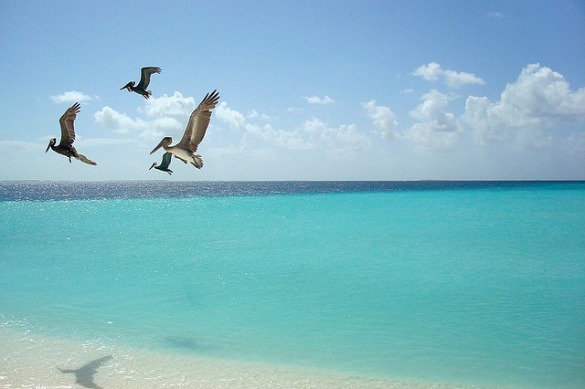
By far, the most pristine and lesser-known group of islands in the Caribbean, Los Roques (pronounced los RO-kays) is an atoll of 350 beach-fringed islands and cays lying 80 miles north of the coast of Venezuela. A 546-acre nature reserve was created in 1972 to protect an extensive ecosystem of islands, beaches, coral reefs, sea turtles, seabirds, marine life, mangroves and sea grass beds. The dazzlingly white sand beaches and shallow, turquoise warm waters are excellent for snorkeling, scuba diving, wind-sailing, kite-surfing, sport fishing and boating and the wide, shallow flats allow beach-goers to stroll into the ocean knee-deep far from the beach.

Most people travel to Los Roques in organized groups, specifically for fishing or diving trips, but it is possible to travel independently. Using a travel agency is advisable, given the currency-exchange, security and logistical challenges of traveling within Venezuela, but if you prefer to go it alone, flights leave daily from Caracas or Isla Margarita (Margarita Island) and hotels at various price levels are plentiful.

San Carlos de Bariloche, Argentina
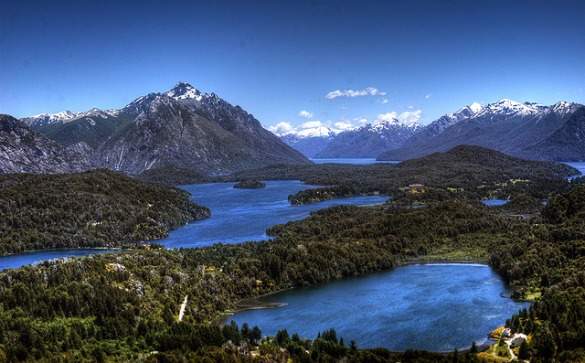
The stunningly beautiful, forested lake district of Argentina known by locals as simply Bariloche, is famous for its crystal blue lakes and rivers dotted with green islands and its backdrop of emerald hills and the snow-capped Andes Mountains. In the Southern Hemisphere winter, it is a mecca for skiers and winter sport enthusiasts, but it is still lively during the summer months of December through April as a center for trekking, camping, forest canopy zip-lining, boating, Jet-skiing, rock-climbing, whitewater rafting, kayaking, paragliding, scuba diving, canoeing, horseback riding and 4×4 off-road excursions.

Located in the center of Patagonia, with a quaint Bavarian-themed town center famous for its chocolate and dulce de leche (caramel sauce), Bariloche is an excellent base for exploring nearby mountain trails and nature reserves such as Nahuel Huapi National Park, the oldest in Argentina. Bariloche has many direct flights from Buenos Aires, Argentina and Santiago de Chile and can also be reached easily from most towns and cities through the expansive and generally reliable long-distance bus networks of South America.

Ilha Grande, Angra Dos Reis, Brazil
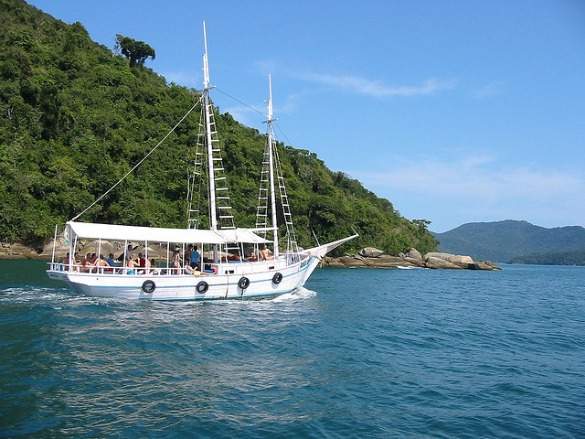
Ilha Grande (pronounced ila GRAN-jay and meaning “Big Island”) is part of a group of twenty-two islands, filled with beautiful, tranquil coves and beaches, lying off the southeast coast of Brazil. Its beaches, such as Lopes Mendes Beach, are consistently rated as some of the best in the world, and are known for their ultra-soft white sand and waves perfect for surfing. The tranquil, laid-back town center (no cars allowed) is easily walked, with many posadas or hostels available in all price ranges, numerous cafes and beach-side restaurants, travel agencies and shops.

After visiting the beaches, travelers looking for more action can try out the full- and half-day sailing excursions on pirate-themed schooners, snorkeling, scuba diving, fishing, surfing, swimming, exploring other islands and beaches, forest trekking, sea kayaking, camping or mountain biking. Although Ilha Grande has no commercial airport, it is a relatively short hop of about 3 and a half hours by bus from nearby Rio de Janeiro to Angra, where there is a connecting ferry. Ilha Grande is a great place to kick back and relax (or recuperate) after the excitement of Rio.

Puerto Maldonado, Peru
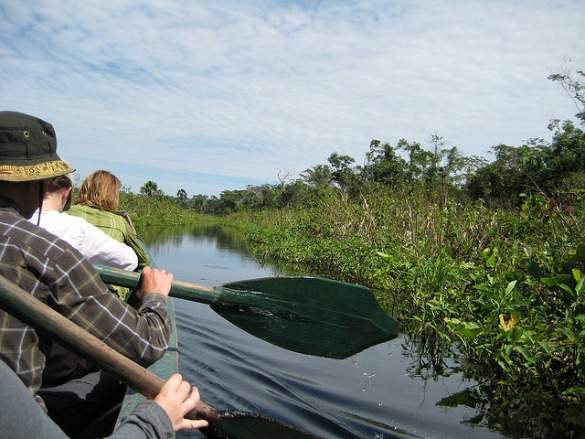
When visiting Peru, most travelers make a beeline to Machu Picchu, Arequipa or Colca Canyon, but the less frequented Amazonia area is well worth a visit. This thickly forested area of the Amazon, with its extensive river system, tropical rain forests and diverse wildlife is the jumping off point for Manú National Park, Tambopata National Reserve, and Bahuaja-Sonene National Park as well as a base for incredible guided nature walking tours, eco-hotels and bird- and animal-spotting 4×4 excursions.

Visitors can view a large variety of birds and animals, including many endangered species: tarantulas, anacondas, clay-eating macaws, parrots, toucans, jaguars, colorful butterflies, egrets, turtles, tapirs, caimans and peccaries are all in abundance. Direct flights from most cities of Peru are widely available. Reserving an eco-tour package is a good idea since many of the trails and excursions are inaccessible, and potentially dangerous, without a guide.

Estancias (Dude Ranches), Uruguay

Uruguay, known as the Switzerland of South America and an important ranching center, has opened many of its traditional estancias to the tourist trade. The cost of running these vast, privately-owned cattle ranches has become prohibitive for most owners and instead of selling their properties, some of which have been in their families for generations, many families have opted to cater to guests. Many estancias now offer private or shared accommodations, asados (a variety of meats grilled outside on a wood fire), horseback riding lessons and a chance for visitors to experience the authentic South American cowboy or “gaucho” way of life first-hand by working as a ranch hand.

There is a wide variety of estancias, from very basic to luxurious, from rustic family-run working cattle ranches to elegant properties with pools, spas and room service. From Montevideo, take one of the many buses to the town closest to the estancia of your choice. Uruguay has an excellent, reliable cross-country bus system and most estancias offer pick-up service from nearby terminals.

Torres del Paine, Chile
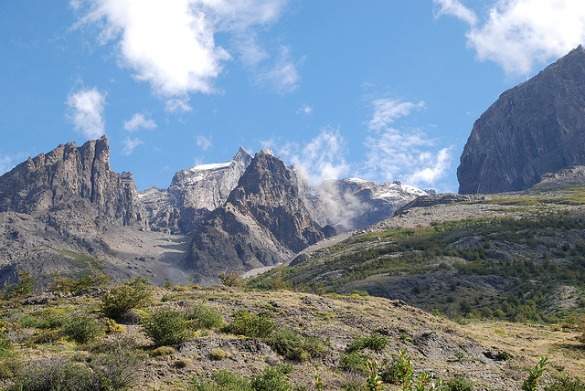
Torres del Paine National Park in the south of Chile boasts almost 600,000 acres of untamed, protected wilderness. Towering mountains, glacial lakes, well-maintained trails and meadows filled with wildflowers are all abundant and the park is home to families of condors, pumas and guanacos. There is something for everyone: numerous hiking trails of varying difficulty and length, boat trips through iceberg-filled waterways, guided tours and glacier hiking. Visitors to the park can stay in nearby Puerto Natales or inside the park grounds at free or low-cost campsites, basic refugios, mid-range or luxury hotels. It’s possible to hike alone, in small groups, with a guided excursion, on a full moon night trek, a 4×4 day trip or explore on horseback.

The weather in the park is highly unpredictable and can be extreme, so raingear and warm clothing are essential even in summer, when the weather can go from warm and sunny to freezing cold with high winds and rain in a matter of minutes. Although the conditions can be challenging, it is well worth a visit to this savagely beautiful park. To reach the park, most travelers fly into Puerto Natales, Chile or El Calafate, Argentina, then take one of the hourly buses that leave from the town center to the park entrance or hotels. Once you pay the park entrance fee, you can stay for as many days as you like inside the park, but be aware that, if you leave the park and want to return, you must re-pay the entrance fee.

Baños, Ecuador
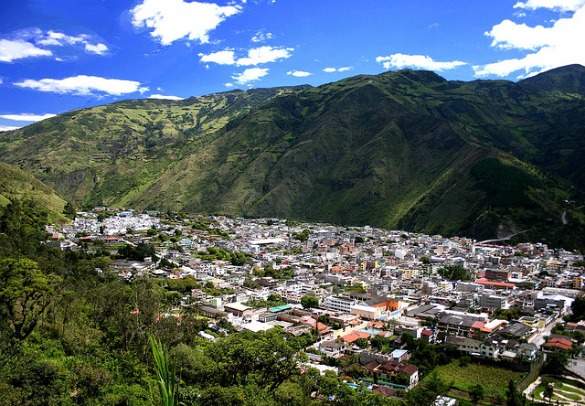
A little known charming town filled with natural hot springs, great restaurants and shops, Baños (named “baths” for its thermal springs), is home to both Tungurahua, the largest volcano in Ecuador and to San Martin Zoological Gardens, a reserve dedicated to the protection of injured and endangered Amazonian animals and birds. It is a great, tranquil base for adventure sports, volcano trekking and exploring, hiking through cloud forests or the high Andes, river rafting, trekking, mountain biking, 4×4 off-road adventures, bird watching, volcano exploration tours or just relaxing in the town’s thermal baths.

Although a popular tourist stop, the town maintains a laid-back atmosphere, perfect for relaxing after a day of hiking up a volcano. To reach Baños, fly into Quito and take a connecting bus to the town center.

Valle de Cocora, Salento, Colombia

One of the most uninhabited, pristine areas of Colombia, Valle de Cocora near Salento is also one of the most breathtaking hiking spots in the world. The valley’s trails offer spectacular views of the Andean volcanoes known as Los Nevados, cloud forests, lush countryside, green rolling hills, waterfalls and colorful, iridescent hummingbirds.

The area is also home to the tallest palm tree in the world, the Wax Palm, which can grow up to 70 meters high (about 230 feet). The trails are generally good, but can be uneven and include several river crossings so it’s best to go with a local guide. In Bogata or Cartegena, there are many travel agencies that can arrange 4×4 transportation and an English-speaking guide. The hike can be done in a day, but take food, plenty of water and warm clothes as this is a remote area with few, if any, places to buy supplies.

Mérida/Los Nevados, Venezuela
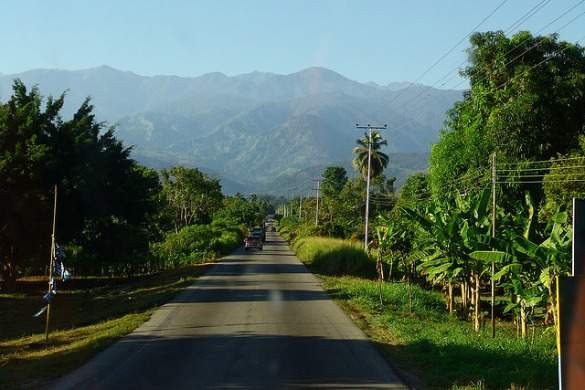
The town of Mérida lies between two Andean mountain ranges and is a hugely popular vacation spot for Venezuelans, but largely unvisited by foreign tourists. The topographically diverse countryside is home to four national parks, twelve state parks, snow-capped mountains, rainforests, waterfalls, lakes, coffee plantations and even a tropical beach (Playa Palmarito). From Mérida, it is possible to take side trips to visit local Andean communities and scenic lookouts.

Take a burro, jeep or cable car to lookout points or to remote mountain villages like Los Nevados, a town that lies between Mérida and the highest mountain in Venezuela, Pico Toro. The weather is spring-like and pleasant year round in Mérida, but can be much colder in the mountain villages, so take warm clothing. From the capital city of Caracas, fly or take a bus directly to Mérida.

The Pantanal, Brazil
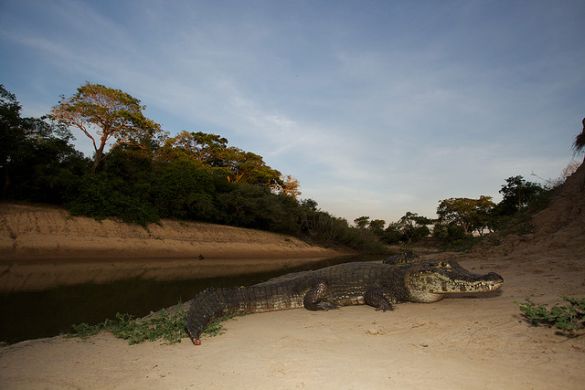
The Pantanal in the south central area of Brazil is the world’s largest protected wetland at 54,000 square miles, with up to 12 sub-regional ecosystems. As of 2000, it is a UNESCO World Heritage Site, but generally lesser known to non-Brazilians than the Amazon basin. The extensive nature reserve was established to protect the more than 1000 species of birds, 400 of fish, 300 of mammals, 480 of reptiles, 9,000 of invertebrates and 3,000 species of known plant life.

Camping, lodging, transportation and tour facilities are available and guides are recommended. Most hostels and hotels offer a package which includes piranha fishing, night safari jeep tours, horseback riding, river excursions, tubing and nature walks. Fly into Sao Paulo or Rio de Janeiro and take a connecting flight to the any of the towns closest to the wetlands: Campo Grande or Bonito in the south, Cuiaba in the north or Corumba in the west. Excursions or independent transportation can be booked from any of the towns and leave daily.

Ten Places in South America to Escape the Northern Winter Cold

Although it seems as if the whole world is being hammered by icy winds and brutal snowstorms, it is winter only in the Northern Hemisphere. In the Southern Hemisphere, it’s summer, and in South America, there is plenty of warm weather, sun, sandy beaches perfect for snorkeling, surfing and sunbathing and lush, green forests and mountains for hiking and camping.

In the mild summer weather of Patagonia in the southern part of the continent, you can zip-line through forest canopies or jet-ski across crystalline, azure lakes. In the tropical rainforests of Colombia and Venezuela, you can trek through steamy jungles to catch a glimpse of colorful birds and exotic animals. Most of South America lies in the Southern Hemisphere, but even in the Northern Hemisphere countries, the weather is generally much warmer at this time of year than in North America or Europe. Head south both to escape the cold and to have the adventure of a lifetime. Here are ten suggestions to get you started:

Los Roques Archipelago National Park, Venezuela

By far, the most pristine and lesser-known group of islands in the Caribbean, Los Roques (pronounced los RO-kays) is an atoll of 350 beach-fringed islands and cays lying 80 miles north of the coast of Venezuela. A 546-acre nature reserve was created in 1972 to protect an extensive ecosystem of islands, beaches, coral reefs, sea turtles, seabirds, marine life, mangroves and sea grass beds. The dazzlingly white sand beaches and shallow, turquoise warm waters are excellent for snorkeling, scuba diving, wind-sailing, kite-surfing, sport fishing and boating and the wide, shallow flats allow beach-goers to stroll into the ocean knee-deep far from the beach.

Most people travel to Los Roques in organized groups, specifically for fishing or diving trips, but it is possible to travel independently. Using a travel agency is advisable, given the currency-exchange, security and logistical challenges of traveling within Venezuela, but if you prefer to go it alone, flights leave daily from Caracas or Isla Margarita (Margarita Island) and hotels at various price levels are plentiful.

San Carlos de Bariloche, Argentina

The stunningly beautiful, forested lake district of Argentina known by locals as simply Bariloche, is famous for its crystal blue lakes and rivers dotted with green islands and its backdrop of emerald hills and the snow-capped Andes Mountains. In the Southern Hemisphere winter, it is a mecca for skiers and winter sport enthusiasts, but it is still lively during the summer months of December through April as a center for trekking, camping, forest canopy zip-lining, boating, Jet-skiing, rock-climbing, whitewater rafting, kayaking, paragliding, scuba diving, canoeing, horseback riding and 4×4 off-road excursions.

Located in the center of Patagonia, with a quaint Bavarian-themed town center famous for its chocolate and dulce de leche (caramel sauce), Bariloche is an excellent base for exploring nearby mountain trails and nature reserves such as Nahuel Huapi National Park, the oldest in Argentina. Bariloche has many direct flights from Buenos Aires, Argentina and Santiago de Chile and can also be reached easily from most towns and cities through the expansive and generally reliable long-distance bus networks of South America.

Ilha Grande, Angra Dos Reis, Brazil

Ilha Grande (pronounced ila GRAN-jay and meaning “Big Island”) is part of a group of twenty-two islands, filled with beautiful, tranquil coves and beaches, lying off the southeast coast of Brazil. Its beaches, such as Lopes Mendes Beach, are consistently rated as some of the best in the world, and are known for their ultra-soft white sand and waves perfect for surfing. The tranquil, laid-back town center (no cars allowed) is easily walked, with many posadas or hostels available in all price ranges, numerous cafes and beach-side restaurants, travel agencies and shops.

After visiting the beaches, travelers looking for more action can try out the full- and half-day sailing excursions on pirate-themed schooners, snorkeling, scuba diving, fishing, surfing, swimming, exploring other islands and beaches, forest trekking, sea kayaking, camping or mountain biking. Although Ilha Grande has no commercial airport, it is a relatively short hop of about 3 and a half hours by bus from nearby Rio de Janeiro to Angra, where there is a connecting ferry. Ilha Grande is a great place to kick back and relax (or recuperate) after the excitement of Rio.

Puerto Maldonado, Peru

When visiting Peru, most travelers make a beeline to Machu Picchu, Arequipa or Colca Canyon, but the less frequented Amazonia area is well worth a visit. This thickly forested area of the Amazon, with its extensive river system, tropical rain forests and diverse wildlife is the jumping off point for Manú National Park, Tambopata National Reserve, and Bahuaja-Sonene National Park as well as a base for incredible guided nature walking tours, eco-hotels and bird- and animal-spotting 4×4 excursions.

Visitors can view a large variety of birds and animals, including many endangered species: tarantulas, anacondas, clay-eating macaws, parrots, toucans, jaguars, colorful butterflies, egrets, turtles, tapirs, caimans and peccaries are all in abundance. Direct flights from most cities of Peru are widely available. Reserving an eco-tour package is a good idea since many of the trails and excursions are inaccessible, and potentially dangerous, without a guide.

Estancias (Dude Ranches), Uruguay

Uruguay, known as the Switzerland of South America and an important ranching center, has opened many of its traditional estancias to the tourist trade. The cost of running these vast, privately-owned cattle ranches has become prohibitive for most owners and instead of selling their properties, some of which have been in their families for generations, many families have opted to cater to guests. Many estancias now offer private or shared accommodations, asados (a variety of meats grilled outside on a wood fire), horseback riding lessons and a chance for visitors to experience the authentic South American cowboy or “gaucho” way of life first-hand by working as a ranch hand.

There is a wide variety of estancias, from very basic to luxurious, from rustic family-run working cattle ranches to elegant properties with pools, spas and room service. From Montevideo, take one of the many buses to the town closest to the estancia of your choice. Uruguay has an excellent, reliable cross-country bus system and most estancias offer pick-up service from nearby terminals.

Torres del Paine, Chile

Torres del Paine National Park in the south of Chile boasts almost 600,000 acres of untamed, protected wilderness. Towering mountains, glacial lakes, well-maintained trails and meadows filled with wildflowers are all abundant and the park is home to families of condors, pumas and guanacos. There is something for everyone: numerous hiking trails of varying difficulty and length, boat trips through iceberg-filled waterways, guided tours and glacier hiking. Visitors to the park can stay in nearby Puerto Natales or inside the park grounds at free or low-cost campsites, basic refugios, mid-range or luxury hotels. It’s possible to hike alone, in small groups, with a guided excursion, on a full moon night trek, a 4×4 day trip or explore on horseback.

The weather in the park is highly unpredictable and can be extreme, so raingear and warm clothing are essential even in summer, when the weather can go from warm and sunny to freezing cold with high winds and rain in a matter of minutes. Although the conditions can be challenging, it is well worth a visit to this savagely beautiful park. To reach the park, most travelers fly into Puerto Natales, Chile or El Calafate, Argentina, then take one of the hourly buses that leave from the town center to the park entrance or hotels. Once you pay the park entrance fee, you can stay for as many days as you like inside the park, but be aware that, if you leave the park and want to return, you must re-pay the entrance fee.

Baños, Ecuador

A little known charming town filled with natural hot springs, great restaurants and shops, Baños (named “baths” for its thermal springs), is home to both Tungurahua, the largest volcano in Ecuador and to San Martin Zoological Gardens, a reserve dedicated to the protection of injured and endangered Amazonian animals and birds. It is a great, tranquil base for adventure sports, volcano trekking and exploring, hiking through cloud forests or the high Andes, river rafting, trekking, mountain biking, 4×4 off-road adventures, bird watching, volcano exploration tours or just relaxing in the town’s thermal baths.

Although a popular tourist stop, the town maintains a laid-back atmosphere, perfect for relaxing after a day of hiking up a volcano. To reach Baños, fly into Quito and take a connecting bus to the town center.

Valle de Cocora, Salento, Colombia

One of the most uninhabited, pristine areas of Colombia, Valle de Cocora near Salento is also one of the most breathtaking hiking spots in the world. The valley’s trails offer spectacular views of the Andean volcanoes known as Los Nevados, cloud forests, lush countryside, green rolling hills, waterfalls and colorful, iridescent hummingbirds.

The area is also home to the tallest palm tree in the world, the Wax Palm, which can grow up to 70 meters high (about 230 feet). The trails are generally good, but can be uneven and include several river crossings so it’s best to go with a local guide. In Bogata or Cartegena, there are many travel agencies that can arrange 4×4 transportation and an English-speaking guide. The hike can be done in a day, but take food, plenty of water and warm clothes as this is a remote area with few, if any, places to buy supplies.

Mérida/Los Nevados, Venezuela

The town of Mérida lies between two Andean mountain ranges and is a hugely popular vacation spot for Venezuelans, but largely unvisited by foreign tourists. The topographically diverse countryside is home to four national parks, twelve state parks, snow-capped mountains, rainforests, waterfalls, lakes, coffee plantations and even a tropical beach (Playa Palmarito). From Mérida, it is possible to take side trips to visit local Andean communities and scenic lookouts.

Take a burro, jeep or cable car to lookout points or to remote mountain villages like Los Nevados, a town that lies between Mérida and the highest mountain in Venezuela, Pico Toro. The weather is spring-like and pleasant year round in Mérida, but can be much colder in the mountain villages, so take warm clothing. From the capital city of Caracas, fly or take a bus directly to Mérida.

The Pantanal, Brazil

The Pantanal in the south central area of Brazil is the world’s largest protected wetland at 54,000 square miles, with up to 12 sub-regional ecosystems. As of 2000, it is a UNESCO World Heritage Site, but generally lesser known to non-Brazilians than the Amazon basin. The extensive nature reserve was established to protect the more than 1000 species of birds, 400 of fish, 300 of mammals, 480 of reptiles, 9,000 of invertebrates and 3,000 species of known plant life.

Camping, lodging, transportation and tour facilities are available and guides are recommended. Most hostels and hotels offer a package which includes piranha fishing, night safari jeep tours, horseback riding, river excursions, tubing and nature walks. Fly into Sao Paulo or Rio de Janeiro and take a connecting flight to the any of the towns closest to the wetlands: Campo Grande or Bonito in the south, Cuiaba in the north or Corumba in the west. Excursions or independent transportation can be booked from any of the towns and leave daily.

Machu Picchu, Peru - Discover The Land of The Incas

There are several places in the world which are very intriguing and famous for their historic architecture. However expecting to see the amazing sites in a place like Machu Picchu is actually the most wondrous thing. It is located about 2350 meters above sea level and the flora and fauna includes some of the most exotic flowers lie Orchids. Many popular historians have visited this place and discovered the hidden amazing beauties and revealed to the rest of the world. Located well above in the Urubamba Valley of Peru it has the most amazing scenic views to offer. Today it is a UNESCO World Heritage Site and there are some concerns on tourism for the Peru government. Ecologically Machu Picchu has to be treated very delicately by tourists as it represents the rich heritage of the Inca tribes.

Machu Picchu, Peru, South America

Machu Picchu, Peru, South America

Things to do in Machu Picchu

There are three main areas in this lace, agricultural, religious and historical. What you notice among the three kinds of laces is a distinct harmony and form. All of them have been arranged neatly with through planning and the only difference is that this kind of planning was done some thousands of years ago.

Visiting the religious areas gives an insight into a whole new world where god existed in other forms and also a great revelation into how people worshipped their beliefs.

Trekking the Inca trail can be exorbitant as it has something hidden at every step of your way. Many tourists vouch that it can be a very intellectually stimulating experience.

Exploring the hill side and viewing the exotic and picturesque surroundings is also a never ending experience.

What to expect

Very few places on earth have the divine grace of beauty and places lie Machu Picchu have kept it in tact. If you want to experience a totally out of the box kind of holiday experience you should go here.

Cancun - Sun and Sands in Mexico

Cancun of Mexico has gained a lot of popularity on the tourist scene of late. Cancun is full of energy and vitality for tourists and can be the ideal fun holiday spot for honeymooners and families as well. It is best known for its beaches and the best way to enjoy the holiday is to make the most of the beaches and the water sports. The best way to enjoy Cancun is partying in the nights and relaxing in the day time absorbing the flavors of the city. You get amazing and eclectic food which can leave you raving for days in Cancun. Other than just sticking to the hotel explore the various beach side restaurants and pubs.

Cancun, Mexico

Cancun, Mexico

Things to do in Cancun

Enjoy the beautiful Caribbean coast and the food and the ambience in Cancun. Yu have world class restaurants serving the most eclectic food in the world to you.

Indulge in water sports with some of the best instructors and it could be the never unforgettable experience that you are looking for. Cancun water sports needs a special mentioning here because they have some of the world class snorkeling and scuba diving facilities. The great Mesoamerican reef is capable of giving competition to the great barrier reef of the Gold Coast.

The Nichupte Lagoon offers the most romantic tours and lined with restaurants that is ideal for honeymooners and anyone in love.

Visit the Mayan Archeological sites because it could be a great revelation into the Mayan world.

What to expect

When you go to Cancun expect a Miami kind of lifestyle but something that is spicier with added beach fun and water sports. This can be the ultimate place for water sports and fun closest to the United States of America. The water is warm and ideal for entertainment through out the year.

Visiting Santiago de Cuba

Santiago de Cuba City,the capital of the same name located in the southeast of the country has full of beautiful sunshine and wind. Santiago de Cuba is far from Havana capital 869km to the southeast. City spread over 1023.8 km2, including urban El Caney, Guilera, Antonio Maceo, Bravo, Castillo Duany, Leyte Vidal and Moncada. Santiago de Cuba is a major city and important second after the capital of Havana Cuba. This is also a port of Cuba. In 2004, the population of the city around 500,000 people. It has experienced periods of rule by Spain, France and England. Santiago de Cuba is the cultural Spain and civilize Africa. Images on Pravda.

13-5 cu ba 1

13-5 cu ba 2

13-5 cu ba 3

13-5 cu ba 4

13-5 cu ba 5

13-5 cu ba 6

13-5 cu ba 7

Share

Twitter Delicious Facebook Digg Stumbleupon Favorites More