Book Review: The Lost Girls

Pre-school, kindergarten, grade school, middle school, high school, college (and maybe grad school), career, marriage, kids, grandkids, and then retirement. Who hasn’t felt, at some point, like they’re on a conveyor belt and stepping off – even for a second – would forever derail their life?

Of course, if it were as easy as: girl feels lost in life, girl set out to travel, goes lots of great places and eats lots of delicious food, girl falls in love and all ends happily after after, there wouldn’t be a book. Oh wait…yes there would, only it would be called Eat, Pray, Love. This is not that book.

Instead, Holly, Jen and Amanda put themselves into sometimes uncomfortable situations, they take some wrong turns and make some bad decisions, they don’t always get along and they face some heartbreak. They don’t end up “finding themselves” but as they say, instead they learn that sometimes it’s okay to just be lost.

Overall, I really enjoyed this book. I could certainly relate to the girls’ feeling of being lost in life. By my mid-20′s I felt like I’d already committed to a path in life, and to deviate would mean starting all over, or at least backtracking, in my progress towards adulthood. I’m sure it’s a feeling many others have had before as well. But as I learned, and as the girls demonstrate in their book, it’s okay to change your path; it’s even okay not to have a path at all.

The book is a great beach read or a perfect travel book (despite its large and heavy hardcover size) that will help pass the hours on a plane, bus or train. It’s well written, but I wouldn’t put it in the category of fine travel literature. It’s light and frothy and fun and more about the personal journey of three friends than a detailed travelogue that explores different countries and cultures. The first few chapters can be a bit tricky. The point of view alternatives between the three friends throughout the book, and it takes some time to get acquainted with the personality of each girl (especially because there isn’t much change in tone between writers) and her unique personal situation. But after a few chapters, I had no problem keeping the girls straight in my mind and found that each one had personality elements with which I could empathize.

It was fun and entertaining to follow along with the girls as they made their way from the party hostels of Brazil to a volunteer camp in Kenya to an ashram in India to the beaches of Southeast Asia and finally to end of their journey in Australia. Along the way I got a small glimpse into the life of a traveler visiting each of those places. I also felt a bit like I was the silent fourth girl on the trip, journeying alongside my friends. Aside from the message of the book, I think what I appreciated most was the story of friendship and the way the three girls interacted, supporting and even pushing one another along their way.

While the book didn’t offer any life-changing revelations for me, I can see its message as inspiring for others. As the girls say, “there’s one thing we know for certain: uprooting our lives to take an unconventional detour was one of the most challenging things we ever did, but the experiences taught us that getting lost isn’t something to avoid, but to embrace. The only leaps of faith you’ll ever regret are the ones you don’t take.”

Book Review: The Lost Girls

Pre-school, kindergarten, grade school, middle school, high school, college (and maybe grad school), career, marriage, kids, grandkids, and then retirement. Who hasn’t felt, at some point, like they’re on a conveyor belt and stepping off – even for a second – would forever derail their life?

Of course, if it were as easy as: girl feels lost in life, girl set out to travel, goes lots of great places and eats lots of delicious food, girl falls in love and all ends happily after after, there wouldn’t be a book. Oh wait…yes there would, only it would be called Eat, Pray, Love. This is not that book.

Instead, Holly, Jen and Amanda put themselves into sometimes uncomfortable situations, they take some wrong turns and make some bad decisions, they don’t always get along and they face some heartbreak. They don’t end up “finding themselves” but as they say, instead they learn that sometimes it’s okay to just be lost.

Overall, I really enjoyed this book. I could certainly relate to the girls’ feeling of being lost in life. By my mid-20′s I felt like I’d already committed to a path in life, and to deviate would mean starting all over, or at least backtracking, in my progress towards adulthood. I’m sure it’s a feeling many others have had before as well. But as I learned, and as the girls demonstrate in their book, it’s okay to change your path; it’s even okay not to have a path at all.

The book is a great beach read or a perfect travel book (despite its large and heavy hardcover size) that will help pass the hours on a plane, bus or train. It’s well written, but I wouldn’t put it in the category of fine travel literature. It’s light and frothy and fun and more about the personal journey of three friends than a detailed travelogue that explores different countries and cultures. The first few chapters can be a bit tricky. The point of view alternatives between the three friends throughout the book, and it takes some time to get acquainted with the personality of each girl (especially because there isn’t much change in tone between writers) and her unique personal situation. But after a few chapters, I had no problem keeping the girls straight in my mind and found that each one had personality elements with which I could empathize.

It was fun and entertaining to follow along with the girls as they made their way from the party hostels of Brazil to a volunteer camp in Kenya to an ashram in India to the beaches of Southeast Asia and finally to end of their journey in Australia. Along the way I got a small glimpse into the life of a traveler visiting each of those places. I also felt a bit like I was the silent fourth girl on the trip, journeying alongside my friends. Aside from the message of the book, I think what I appreciated most was the story of friendship and the way the three girls interacted, supporting and even pushing one another along their way.

While the book didn’t offer any life-changing revelations for me, I can see its message as inspiring for others. As the girls say, “there’s one thing we know for certain: uprooting our lives to take an unconventional detour was one of the most challenging things we ever did, but the experiences taught us that getting lost isn’t something to avoid, but to embrace. The only leaps of faith you’ll ever regret are the ones you don’t take.”

Top Ten Travel Articles of 2010

Here are BootsnAll, we publish at least one travel article every day, Monday through Friday. The amounts to hundreds of articles that – we hope – teach you something new about the world, help you travel better, and inspire you to feed your wanderlust with travel. As is popular at this time of year, we though it was fitting to take a look back at 2010 to see which articles our readers seemed to connect with most.

From a rundown on the drinking customs of cultures around the world to an interview with badass traveling foodie Tony Bourdain, here are the most popular BootsnAll articles of the past year.

10. How to Get Drunk Around the World: 5 Countries & Their Drinking Rules

We believe that sampling the local drink is a great way to get to know a culture. Writer Lucy Corne agrees and takes us on a trip though five different countries, including South Africa, Australia, and Spain, and shows us the ins and outs of local drinking customs. From why you should watch how you phrase a drinking invitation in Spain, to what to expect when sharing a drink in South Africa, here’s what you need to know to avoid a drinking faux pas.

>> Read How to Get Drunk Around the World: 5 Countries & Their Drinking Rules
>> Check out more BootsnAll articles on drinking

9. The Real Cost of Traveling the World Like Rolf Potts

This past fall, travel writer Rolf Potts went on a six week round-the-world journey without so much as a backpack. Carrying everything he needed on his body, Rolf proved that you don’t need to bring a lot of stuff to have an epic trip. While some of us may not be able to fathom a trip without luggage, many would-be round-the-world travelers think it’s the lack of money that’s holding them back. Adam Seper crunched the numbers on the No Baggage Challenge and then showed us how much it would cost to do the same trip on a backpacker budget. Hint: it’s cheaper than you think!

>> Read The Real Cost of Traveling the World Like Rolf Potts
>> Check out more BootsnAll articles on round-the-world travel

8. Why It’s Not Crazy for Working Professionals To Quit Their Jobs and Travel the World

Long-term, round-the-world travel can only be done the summer after high school or college. Any working professional would be crazy to leave behind the stability of a job in order to travel. You’ll miss out on too much and your career will never recover, right? Wrong. Adam Seper dispels these myths and more and makes the case that taking a break to travel won’t ruin your career (but will add more resume-worthy skills), is not dangerous, and is most certainly not crazy. Unless, of course, you redefine crazy. As Adam says, “To us, not quitting our jobs and traveling the world was crazy. Doing it seemed logical.”

>> Read Why It’s Not Crazy for Working Professionals To Quit Their Jobs and Travel the World
>>
Check out more BootsnAll articles on career break travel

7. World Cup Host Countries 1930-2010

World Cup fever took over in 2010, especially at the BootsnAll offices, as some staff got to go to South Africa to report on the games for our World Cup blog. We took a look back at some of the World Cup host countries, important moments from games held in each one, and how you can travel to each host country now.

>> Read World Cup Host Countries 1930-2010
>>
Check out more BootsnAll articles on South Africa

6. 8 of the Most Unique Walking Paths in the World

Hiking trails and walking paths around the world allow us to see a place from ground level, get in some exercise while we sightsee, and take in some spectacular views. Jeanine Barone takes us on a tour of some of the most unique of these paths in the world. From the trails over wooden boardwalks that traverse some of Plitvice Lakes National Park’s 16 lakes in Croatia to a four mile path over towering coastal cliffs in Iceland’s Westmann Islands, these paths will surely make you want to lace up your hiking boots.

>> Read 8 of the Most Unique Walking Paths in the World
>>
Check out more BootsnAll articles on walking and hiking

5. 13 of the Weirdest Bars in the World

Another alcohol-related post, this one examines not what we’re drinking and how, but where we’re drinking it. Victoria Brewood shows us 13 unusual places to knock one back. From Sweden’s Icebar to the Hobbit House in the Philippines to a bar inside a tree in South Africa, these watering holes offer a lot more than your average corner bar.

>> Read 13 of the Weirdest Bars in the World
>>
Check out more BootsnAll articles on weird and unusual places around the world

4. Best Architecture Cities in the World

Architectural marvels have always been high on the list of must-see sights. Gaudi’s Sagrada Familia in Barcelona, Chicago’s Willis (Formerly Sears) Tower, and the Colosseum in Rome are among the most iconic buildings in the world, and the cities they reside in are among the best places to see architecture at its most magnificent. Betsy Mikel takes us on a tour of these and other cities that she says are the best for those with a passion for manmade structures.

>> Read Best Architecture Cites in the World
>>
Check out more BootsnAll articles on art around the world

3. Eat Your Way Around Madrid

The popularity of this guest post proves just how much our readers love to learn about good food and local cuisine. Writer Lindsey Ford extols the delights of Madrid’s cuisine and tells us where (and how) to eat some of these signature dishes. Warning: it’s hard to read about the city’s famous jamon, churros, croquettas, and other culinary wonders without getting a little drool on your computer.

>> Read Eat Your Way Around Madrid
>>
Check out more BootsnAll articles on dining and cuisine

2. 13 Famous Bridges Around the World that You Can Climb or Walk Across

Whether they be engineering marvels or iconic images from a city skyline, bridges have always fascinated. In this article, BootsnAll’s Cristina Dima shows us bridges we can not only see from afar or while zipping over in a car, but those that we can take the time to truly examine and admire while slowly walking or climbing across. Including Australia’s Sydney Harbour Bridge, Prague’s Charles Bridge, and the Tower Bridge in London, this list spans the globe from the US to Japan to Turkey, stopping twice in Italy for two of the most romantic bridges, the Rialto in Venice and the Ponet Vecchio in Florence.

>> Read 13 Famous Bridges Around the World that You Can Climb or Walk Across
>>
Check out more BootsnAll articles on Italy

1. How I Travel: Anthony Bourdain

The culinary world’s king of snark made time to answer a few of our burning questions in what was by far the most popular article of 2010. From the travelers who inspire him to his favorite destinations to how he handles jet lag, we got a little glimpse into mind of Tony Bourdain.

Top Ten Travel Articles of 2010

Here are BootsnAll, we publish at least one travel article every day, Monday through Friday. The amounts to hundreds of articles that – we hope – teach you something new about the world, help you travel better, and inspire you to feed your wanderlust with travel. As is popular at this time of year, we though it was fitting to take a look back at 2010 to see which articles our readers seemed to connect with most.

From a rundown on the drinking customs of cultures around the world to an interview with badass traveling foodie Tony Bourdain, here are the most popular BootsnAll articles of the past year.

10. How to Get Drunk Around the World: 5 Countries & Their Drinking Rules

We believe that sampling the local drink is a great way to get to know a culture. Writer Lucy Corne agrees and takes us on a trip though five different countries, including South Africa, Australia, and Spain, and shows us the ins and outs of local drinking customs. From why you should watch how you phrase a drinking invitation in Spain, to what to expect when sharing a drink in South Africa, here’s what you need to know to avoid a drinking faux pas.

>> Read How to Get Drunk Around the World: 5 Countries & Their Drinking Rules
>> Check out more BootsnAll articles on drinking

9. The Real Cost of Traveling the World Like Rolf Potts

This past fall, travel writer Rolf Potts went on a six week round-the-world journey without so much as a backpack. Carrying everything he needed on his body, Rolf proved that you don’t need to bring a lot of stuff to have an epic trip. While some of us may not be able to fathom a trip without luggage, many would-be round-the-world travelers think it’s the lack of money that’s holding them back. Adam Seper crunched the numbers on the No Baggage Challenge and then showed us how much it would cost to do the same trip on a backpacker budget. Hint: it’s cheaper than you think!

>> Read The Real Cost of Traveling the World Like Rolf Potts
>> Check out more BootsnAll articles on round-the-world travel

8. Why It’s Not Crazy for Working Professionals To Quit Their Jobs and Travel the World

Long-term, round-the-world travel can only be done the summer after high school or college. Any working professional would be crazy to leave behind the stability of a job in order to travel. You’ll miss out on too much and your career will never recover, right? Wrong. Adam Seper dispels these myths and more and makes the case that taking a break to travel won’t ruin your career (but will add more resume-worthy skills), is not dangerous, and is most certainly not crazy. Unless, of course, you redefine crazy. As Adam says, “To us, not quitting our jobs and traveling the world was crazy. Doing it seemed logical.”

>> Read Why It’s Not Crazy for Working Professionals To Quit Their Jobs and Travel the World
>>
Check out more BootsnAll articles on career break travel

7. World Cup Host Countries 1930-2010

World Cup fever took over in 2010, especially at the BootsnAll offices, as some staff got to go to South Africa to report on the games for our World Cup blog. We took a look back at some of the World Cup host countries, important moments from games held in each one, and how you can travel to each host country now.

>> Read World Cup Host Countries 1930-2010
>>
Check out more BootsnAll articles on South Africa

6. 8 of the Most Unique Walking Paths in the World

Hiking trails and walking paths around the world allow us to see a place from ground level, get in some exercise while we sightsee, and take in some spectacular views. Jeanine Barone takes us on a tour of some of the most unique of these paths in the world. From the trails over wooden boardwalks that traverse some of Plitvice Lakes National Park’s 16 lakes in Croatia to a four mile path over towering coastal cliffs in Iceland’s Westmann Islands, these paths will surely make you want to lace up your hiking boots.

>> Read 8 of the Most Unique Walking Paths in the World
>>
Check out more BootsnAll articles on walking and hiking

5. 13 of the Weirdest Bars in the World

Another alcohol-related post, this one examines not what we’re drinking and how, but where we’re drinking it. Victoria Brewood shows us 13 unusual places to knock one back. From Sweden’s Icebar to the Hobbit House in the Philippines to a bar inside a tree in South Africa, these watering holes offer a lot more than your average corner bar.

>> Read 13 of the Weirdest Bars in the World
>>
Check out more BootsnAll articles on weird and unusual places around the world

4. Best Architecture Cities in the World

Architectural marvels have always been high on the list of must-see sights. Gaudi’s Sagrada Familia in Barcelona, Chicago’s Willis (Formerly Sears) Tower, and the Colosseum in Rome are among the most iconic buildings in the world, and the cities they reside in are among the best places to see architecture at its most magnificent. Betsy Mikel takes us on a tour of these and other cities that she says are the best for those with a passion for manmade structures.

>> Read Best Architecture Cites in the World
>>
Check out more BootsnAll articles on art around the world

3. Eat Your Way Around Madrid

The popularity of this guest post proves just how much our readers love to learn about good food and local cuisine. Writer Lindsey Ford extols the delights of Madrid’s cuisine and tells us where (and how) to eat some of these signature dishes. Warning: it’s hard to read about the city’s famous jamon, churros, croquettas, and other culinary wonders without getting a little drool on your computer.

>> Read Eat Your Way Around Madrid
>>
Check out more BootsnAll articles on dining and cuisine

2. 13 Famous Bridges Around the World that You Can Climb or Walk Across

Whether they be engineering marvels or iconic images from a city skyline, bridges have always fascinated. In this article, BootsnAll’s Cristina Dima shows us bridges we can not only see from afar or while zipping over in a car, but those that we can take the time to truly examine and admire while slowly walking or climbing across. Including Australia’s Sydney Harbour Bridge, Prague’s Charles Bridge, and the Tower Bridge in London, this list spans the globe from the US to Japan to Turkey, stopping twice in Italy for two of the most romantic bridges, the Rialto in Venice and the Ponet Vecchio in Florence.

>> Read 13 Famous Bridges Around the World that You Can Climb or Walk Across
>>
Check out more BootsnAll articles on Italy

1. How I Travel: Anthony Bourdain

The culinary world’s king of snark made time to answer a few of our burning questions in what was by far the most popular article of 2010. From the travelers who inspire him to his favorite destinations to how he handles jet lag, we got a little glimpse into mind of Tony Bourdain.

Ten Experiences Not to Miss in Turkey

Turkey is a land that is so varied and in constant contrast with itself that it can be hard to ever truly understand, but to get a start there are many sites that can give a flavor of the country’s unique mix of history, culture and natural wonders. In traversing this country from west to east the traveler will see astonishing differences in cultures and ways of life. From the modern, cosmopolitan capital to the eastern outposts of Sanliurfa and Van there is a world of difference. Even the otherworldly natural sites are still filled with remnants of human history and are so diverse it is hard to believe they all fit in one country.

The ancient treasures of Istanbul

As the sun begins to sink below the horizon and the sky turns a deep blue, loud speakers attached to the minarets of mosques all around the city come to life to the blaring wails of the call to prayer. If you are standing in the right part of town you can hear these songs floating on the night air seemingly calling back and forth to each other from three or four mosques at once.

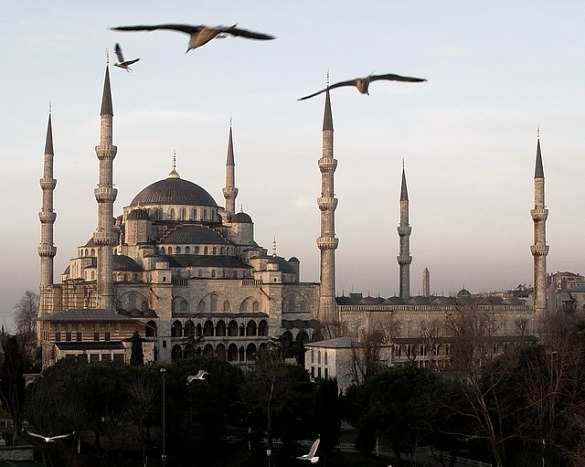
To stand in Sultanahmet Park between two of the world’s most impressive ancient mosques, the Aya Sofia and the Sultanahmet, and experience the call to prayer is an experience that will stay with you forever. These two massive buildings are at the core of Istanbul’s ancient city and are two of its most impressive places to visit. Although the Aya Sofia (also known as the Hagia Sophia) no longer does a call to prayer as it is now a museum, it is still an incredible monument. Inside you will find uncovered frescoes and converted religious symbols from its past. The monument started life as a Christian Cathedral and was then converted to a mosque before becoming a museum.

Across the plaza is the equally impressive and still operating Sultanahmet mosque, which is better known as the Blue Mosque for the blue hued tiles that cover the inside of the enormous structure. As a still active religious site, there are more rules to be followed when entering the Blue Mosque. You will be required to remove your shoes (bags are provided) and women will be asked to cover their heads (scarves are also provided). It is also recommended that you dress modestly and cover up as much as you can.

After these two religious shrines, there are several other must-see sites of Istanbul, all of which come with their own extensive history. Close behind the Aya Sofia is Topkapi Palace. Its sprawling grounds are an incredible proof of the lavish lives of Ottoman emperors, especially in the immaculately preserved harem, where the sultan’s concubines lived. Here you will also find many ornate artifacts and great examples of Ottoman architecture. These three sites all sit within a short walk of one another and are just the very beginning of the wonders of Istanbul.

Kirkpinar Oil Wrestling Festival in Edirne

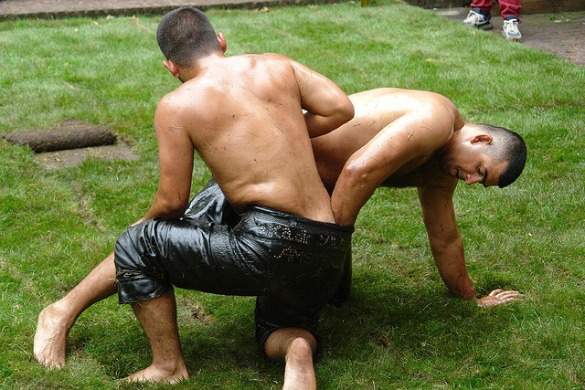
The sun beats down heavily on the backs of fifty men who take high leaps, skipping across a field of long grass, slapping their knees in the air. A thumping drum beats and shrill horns play constantly. The men, covered in a slick coating of oil and wearing only shin-length leather pants pair off and at once engage in fierce combat. The crowded stadium erupts with cheers when some of the most popular wrestlers win their bouts and slowly the field is paired down to just one match of exhausted hulking men. With its end comes the end of the first round of the heavyweight class of an ancient festival.

This is how the main event of the 648th Kirkpinar Oil Wrestling tournament kicks off. The event, the world’s longest running sporting competition, is held annually in Edirne, a small city on the European side of the country, and attracts thousands of visitors from around Turkey and Europe. This odd and historical tournament is surrounded by a festival that consumes the city for a week. On the final three days, the wrestling tournament takes place and after the final bout a head wrestler is crowned.

Seeing greased up men in leather shorts try and pin each other in a field may not be everyone’s ideal vacation, but even still, the Kirkpinar festival and tournament is a truly authentic and unique event. In addition to the wrestling tournament, which all takes place at a stadium on the edge of town, the downtown area offers music concerts, fireworks, a parade and many other activities.

The Travertine pools of Pamukkale

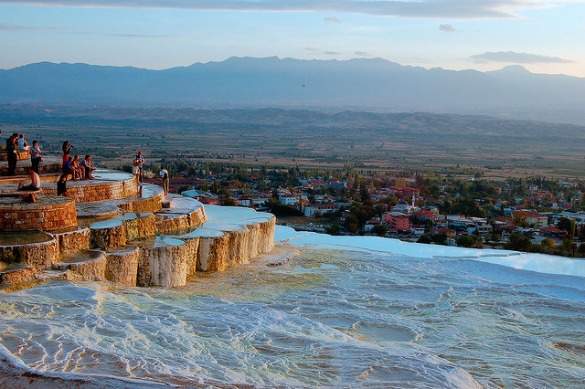
On arrival into the small town of Pamukkale, it is almost impossible to miss the town’s main attraction. Overlooking the town is the strikingly beautiful white ‘cotton castle,’ as the name means in Turkish. The attraction is made from calcium deposits that seem to flow like melting glue down a large hill towards the town. As you approach the hill and begin to climb, you see that it is in fact covered in a thick layer of white limestone that has been slowly added to over centuries as flowing water from the hot pools above deposited more and more bits of calcium.

Since becoming a UNESCO World Heritage Site in 1988, people are no longer allowed to walk over or sit in the naturally formed pools, but there are still wooden boardwalks that take you around and over some of the pools, which gives a great view without damaging the fragile site.

What adds an extra level to this already spectacular natural site is the cultural interest it also holds. Perched on top of the hill are the ruins of the ancient city of Hierapolis. Here are the impressively intact remains of many stone structures, including a huge necropolis (city of the dead) filled with carved stone sarcophagi. There is also, of course, the quintessential roman amphitheatre, and some intact streets and gates. This city drew people to it even in ancient times for the supposed healing powers in the hot baths which people can still enjoy today.

The ancient city of Ephesus

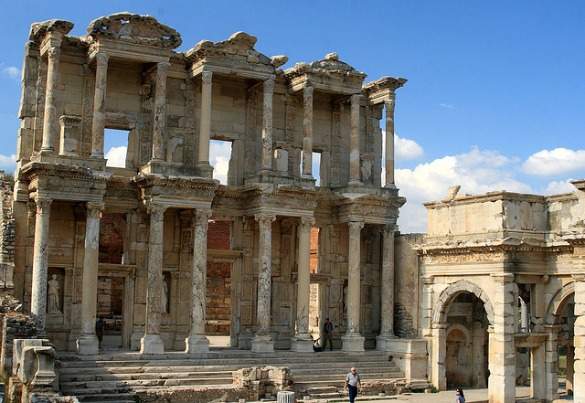
If you have ever wondered what your life would have been like if you had lived around the time of Jesus Christ and you don’t currently own a time machine, then your best bet is the ruins of the ancient city of Ephesus. It is one of the world’s best-preserved examples of an ancient city and boasts some incredible structures. The most iconic is the facade of the Roman Library of Celsus.

Whether or not you get a tour of the grounds, be sure to stick around close to closing time. At this point you can explore the city in the low light of the late afternoon virtually by yourself, at least by comparison to the hoards of tourists that can be there during the day. At this time of day, walking down the large stones that make up the ancient main road toward the dusty brown two-storey library, you feel like it could be any period in time. It would be easy to believe you were walking down the main thoroughfare of Ephesus when it was flourishing city during the height of the Roman Empire.

Between the modern town of Selçuk and Ephesus are the remains of what was once one of the Seven Wonders of the World. Now only a few pieces of foundation and a single reconstructed pillar are all that is left of the once great Temple of Artemis, which was built and destroyed and rebuilt many times between 550 BC and 391 AD. Unfortunately, most of the best artifacts from this temple now lie in the British Museum. Around Selçuk there are several other impressive things to see, especially for people of Christian faith. The ruins of what was once the massive St. John Basilica are all that surround the remains of what is believed to be Saint John the Apostle, and the House of the Virgin, a modest stone chapel, sits on the site of the house where the Virgin Mary died.

The Mediterranean Coast

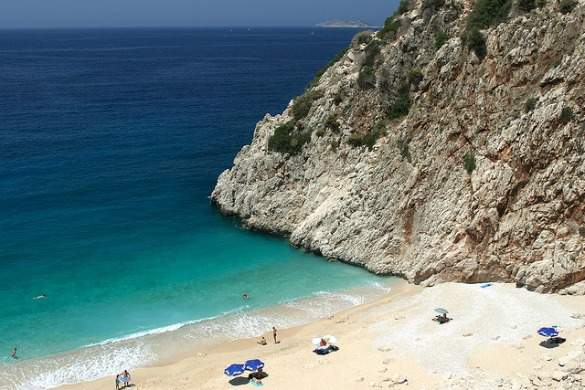
Turkey has 1577km of Mediterranean coastline, yet still isn’t always recognized as a coastal beach destination. While not on the same level as Italy or Greece when it comes to tourist infrastructure, Turkey offers the same pristine coastline and turquoise waters as more popular destinations.

A fantastic way to experience and enjoy the gorgeous Turkish Mediterranean is aboard a Turkish Gület, a wide, heavy, flat bottomed, wooden sail boat that can navigate the shallow channels along the coast because of its lack of a keel. There are dozens of options for starting and ending points for these cruises, but most will begin or end in either Bodrum, Marmaris, Fethiye or Demre.

Along the way there are many interesting and picturesque sights to see, which will be different with every boat’s itinerary. One town not to miss is Kaleköy, a tiny town clinging to the side of a rocky hill that comes right down to the water’s edge, is accessible only by boat and some small walking paths, and is crowned by the well-preserved ruins of a Byzantine stone fortress built on the top of the hill and overlooks the blue green waters of the bay.

For people looking for just a sandy beach and clear water, Ölüdeniz would be the spot. With a gorgeous white sand peninsula jutting into a secluded bay of calm blue water, this is the perfect Turkish Mediterranean beach. For those looking for beaches with a little more excitement, the tourist hotspot of Bodrum is the place to go, with packed pubs and clubs lining the beach-front streets in the summer months; this is the spot for Turks and foreign tourists to party by night and enjoy the sun and sand during the day.

Mount Nemrut

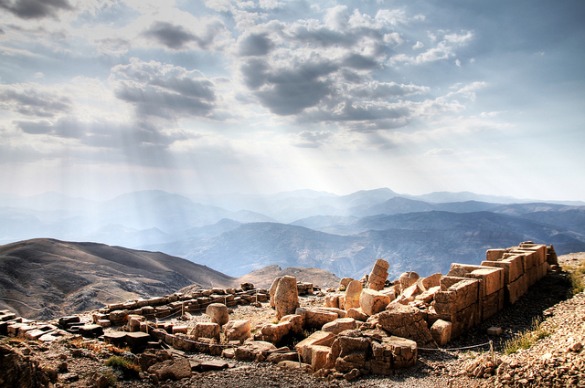
At the peak of the 2150 meter Mount Nemrut is one of the most spectacular monuments of the ancient world. On the top of the mountain sits the massive burial mound of King Antiochos I of Commagene and on this sits five seated statues on both the eastern and western faces. The eight-none meter high bodies are intact while the heads have all succumbed to the years and now lie on the ground in front, still displaying remarkable detail and craftsmanship. These statues, which are of Apollo, Tyche the Commagene god of fertility, Zeus, Antiochos I and Heracles, are joined by several smaller lion and eagle statues. This burial mound and the statue-covered terraces are considered by some to be the eighth ancient wonder of the world.

Cappadocia

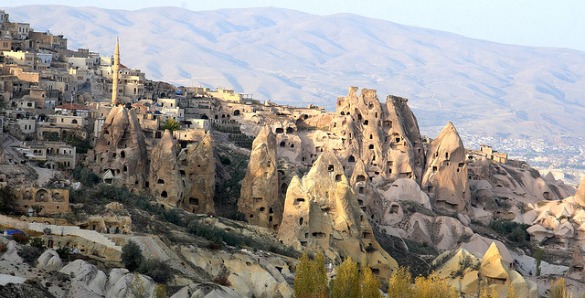
Perhaps Turkey’s most impressive and famous site outside of Istanbul is the otherworldly landscape of the region of Cappadocia.

In Cappadocia, wherever you look, even underground, there is history and creative uses of the land. Some of the best places to find this is in the underground cities, which were built to protect the locals from both the elements and persecution from the Roman Empire. Some of these extend down to eight levels underground. Only a few of the largest underground cities are available to visitors who can see the conditions up to 10,000 people would endure for up to four months. Extending high above ground are similar defenses in the form of fortresses dug into tall steep sided hills.

The easiest place to see the curious buildings dug into the landscape is at the Open Air Museum where, for a fee, you can explore a small, partially restored village filled with modest homes, and small churches covered in gorgeous frescoes. However, if you have a bit more time you can explore the trails around the town of Goreme, where you can find abandoned homes and churches scattered through the countryside.

Sümela Monastery

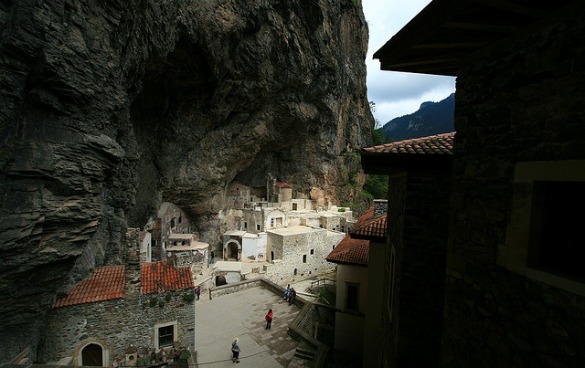
For a monastery built into the vertical rock face of a mountain hanging hundreds of meters above the valley floor, Sümela Monastery near the northeastern Black Sea coast, is surprisingly easy to access. Inside the monastery the main attraction is the high cavernous main chamber of the rock church, which has been dug directly into the mountain and is covered in colorful frescoes which date from the 18th century.

The monastery was founded in 386 AD and has undergone dozens of additions and reconstructions over the years, but took its current form during the 13th century. Outside the main monastery is a spring that is considered sacred by Orthodox Greeks and large stone arches that form an aqua-duct which supplied water to the monastery. The monastery is very accessible, as an hour long minibus ride takes you from nearby Trabzon to the mountain, followed by a short path hike to get to the building itself. Some of the most impressive views of the monastery come on some of the stops the bus makes on the way up, as this affords you an opportunity to see the monastery from a distance in its lush valley surroundings.

The Ottoman town of Safranbolu

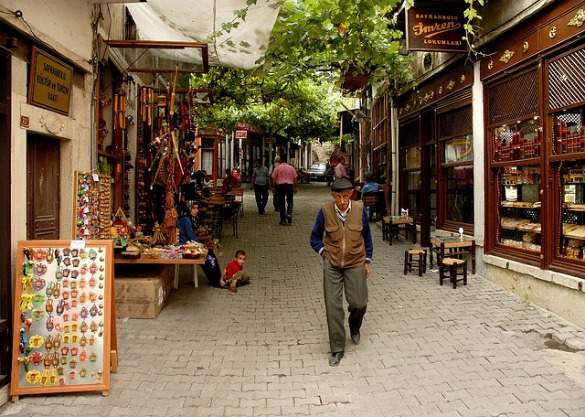
The small tourist town of Safranbolu is almost like a large working historic park. In the 1970s the town was falling into a state of disrepair and decay, but luckily for visitors, the Turkish government recognized it for the architectural and cultural gem that it is and began an extensive repair and recovery effort which culminated in the town being added to the UNESCO World Heritage list in 1994. The town has been expertly refurbished back to its former Ottoman era glory, and walking down the narrow cobblestone streets between red roofed buildings gives visitors a glimpse into Turkey’s history.

Artisans who still practice Ottoman era trades are encouraged to move into the small shops, and Ottoman food is available all over town. The town isn’t just for show though; the shops and outdoor market are also for the locals, who are very proud of the town’s history and architecture. The town provides visitors with the unique opportunity to stay in style and live like a wealthy Ottoman as many of the era’s mansions have been converted into hotels and guesthouses, some of which are very affordable.

The ghost town of Kayaköy

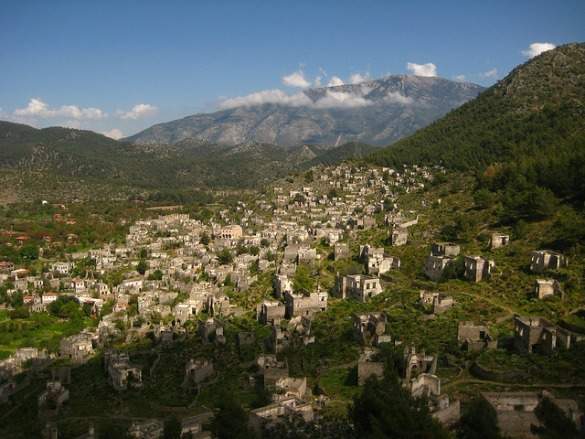
This town of 2000 to 3000 people was abandoned in 1923 after the Greco-Turkish war because of mandatory population exchanges between Greece and Turkey. There are many opinions as to why people never moved into the vacated homes, one of the more interesting being the rumours about the outgoing Greeks poisoning the town’s wells. A more practical reason is that the town’s location on the side of a hill was well suited for the craftsmen Greeks who had lived there, but was useless for the Turkish farmers of the area.

Beneath a layer of dust in the abandoned chapels of Kayaköy you will still find colourful frescoes and delicate tile work. There are very few visitors to the town to disturb the dust, so much of the time you will find yourself alone wandering through crumbling and roofless stone cottages and cracked empty churches for hours. Even by the road at the bottom of the hillside town there are only a few vendors and restaurants to take away from the ambiance of the eerie ghost town.

The true wonder of the ghost town is just in walking its dirt paths and overgrown stone staircases to see a frozen tableaux of a different time, just left to be reclaimed by nature. There are still many visible artifacts left of the Greek culture which once thrived in the town. The bits of colorful paint, intricate stone work and crumbling frescoes are in constant danger from the elements and local looters who remove and sell the town’s artifacts.

Ten Experiences Not to Miss in Turkey

Turkey is a land that is so varied and in constant contrast with itself that it can be hard to ever truly understand, but to get a start there are many sites that can give a flavor of the country’s unique mix of history, culture and natural wonders. In traversing this country from west to east the traveler will see astonishing differences in cultures and ways of life. From the modern, cosmopolitan capital to the eastern outposts of Sanliurfa and Van there is a world of difference. Even the otherworldly natural sites are still filled with remnants of human history and are so diverse it is hard to believe they all fit in one country.

The ancient treasures of Istanbul

As the sun begins to sink below the horizon and the sky turns a deep blue, loud speakers attached to the minarets of mosques all around the city come to life to the blaring wails of the call to prayer. If you are standing in the right part of town you can hear these songs floating on the night air seemingly calling back and forth to each other from three or four mosques at once.

To stand in Sultanahmet Park between two of the world’s most impressive ancient mosques, the Aya Sofia and the Sultanahmet, and experience the call to prayer is an experience that will stay with you forever. These two massive buildings are at the core of Istanbul’s ancient city and are two of its most impressive places to visit. Although the Aya Sofia (also known as the Hagia Sophia) no longer does a call to prayer as it is now a museum, it is still an incredible monument. Inside you will find uncovered frescoes and converted religious symbols from its past. The monument started life as a Christian Cathedral and was then converted to a mosque before becoming a museum.

Across the plaza is the equally impressive and still operating Sultanahmet mosque, which is better known as the Blue Mosque for the blue hued tiles that cover the inside of the enormous structure. As a still active religious site, there are more rules to be followed when entering the Blue Mosque. You will be required to remove your shoes (bags are provided) and women will be asked to cover their heads (scarves are also provided). It is also recommended that you dress modestly and cover up as much as you can.

After these two religious shrines, there are several other must-see sites of Istanbul, all of which come with their own extensive history. Close behind the Aya Sofia is Topkapi Palace. Its sprawling grounds are an incredible proof of the lavish lives of Ottoman emperors, especially in the immaculately preserved harem, where the sultan’s concubines lived. Here you will also find many ornate artifacts and great examples of Ottoman architecture. These three sites all sit within a short walk of one another and are just the very beginning of the wonders of Istanbul.

Kirkpinar Oil Wrestling Festival in Edirne

The sun beats down heavily on the backs of fifty men who take high leaps, skipping across a field of long grass, slapping their knees in the air. A thumping drum beats and shrill horns play constantly. The men, covered in a slick coating of oil and wearing only shin-length leather pants pair off and at once engage in fierce combat. The crowded stadium erupts with cheers when some of the most popular wrestlers win their bouts and slowly the field is paired down to just one match of exhausted hulking men. With its end comes the end of the first round of the heavyweight class of an ancient festival.

This is how the main event of the 648th Kirkpinar Oil Wrestling tournament kicks off. The event, the world’s longest running sporting competition, is held annually in Edirne, a small city on the European side of the country, and attracts thousands of visitors from around Turkey and Europe. This odd and historical tournament is surrounded by a festival that consumes the city for a week. On the final three days, the wrestling tournament takes place and after the final bout a head wrestler is crowned.

Seeing greased up men in leather shorts try and pin each other in a field may not be everyone’s ideal vacation, but even still, the Kirkpinar festival and tournament is a truly authentic and unique event. In addition to the wrestling tournament, which all takes place at a stadium on the edge of town, the downtown area offers music concerts, fireworks, a parade and many other activities.

The Travertine pools of Pamukkale

On arrival into the small town of Pamukkale, it is almost impossible to miss the town’s main attraction. Overlooking the town is the strikingly beautiful white ‘cotton castle,’ as the name means in Turkish. The attraction is made from calcium deposits that seem to flow like melting glue down a large hill towards the town. As you approach the hill and begin to climb, you see that it is in fact covered in a thick layer of white limestone that has been slowly added to over centuries as flowing water from the hot pools above deposited more and more bits of calcium.

Since becoming a UNESCO World Heritage Site in 1988, people are no longer allowed to walk over or sit in the naturally formed pools, but there are still wooden boardwalks that take you around and over some of the pools, which gives a great view without damaging the fragile site.

What adds an extra level to this already spectacular natural site is the cultural interest it also holds. Perched on top of the hill are the ruins of the ancient city of Hierapolis. Here are the impressively intact remains of many stone structures, including a huge necropolis (city of the dead) filled with carved stone sarcophagi. There is also, of course, the quintessential roman amphitheatre, and some intact streets and gates. This city drew people to it even in ancient times for the supposed healing powers in the hot baths which people can still enjoy today.

The ancient city of Ephesus

If you have ever wondered what your life would have been like if you had lived around the time of Jesus Christ and you don’t currently own a time machine, then your best bet is the ruins of the ancient city of Ephesus. It is one of the world’s best-preserved examples of an ancient city and boasts some incredible structures. The most iconic is the facade of the Roman Library of Celsus.

Whether or not you get a tour of the grounds, be sure to stick around close to closing time. At this point you can explore the city in the low light of the late afternoon virtually by yourself, at least by comparison to the hoards of tourists that can be there during the day. At this time of day, walking down the large stones that make up the ancient main road toward the dusty brown two-storey library, you feel like it could be any period in time. It would be easy to believe you were walking down the main thoroughfare of Ephesus when it was flourishing city during the height of the Roman Empire.

Between the modern town of Selçuk and Ephesus are the remains of what was once one of the Seven Wonders of the World. Now only a few pieces of foundation and a single reconstructed pillar are all that is left of the once great Temple of Artemis, which was built and destroyed and rebuilt many times between 550 BC and 391 AD. Unfortunately, most of the best artifacts from this temple now lie in the British Museum. Around Selçuk there are several other impressive things to see, especially for people of Christian faith. The ruins of what was once the massive St. John Basilica are all that surround the remains of what is believed to be Saint John the Apostle, and the House of the Virgin, a modest stone chapel, sits on the site of the house where the Virgin Mary died.

The Mediterranean Coast

Turkey has 1577km of Mediterranean coastline, yet still isn’t always recognized as a coastal beach destination. While not on the same level as Italy or Greece when it comes to tourist infrastructure, Turkey offers the same pristine coastline and turquoise waters as more popular destinations.

A fantastic way to experience and enjoy the gorgeous Turkish Mediterranean is aboard a Turkish Gület, a wide, heavy, flat bottomed, wooden sail boat that can navigate the shallow channels along the coast because of its lack of a keel. There are dozens of options for starting and ending points for these cruises, but most will begin or end in either Bodrum, Marmaris, Fethiye or Demre.

Along the way there are many interesting and picturesque sights to see, which will be different with every boat’s itinerary. One town not to miss is Kaleköy, a tiny town clinging to the side of a rocky hill that comes right down to the water’s edge, is accessible only by boat and some small walking paths, and is crowned by the well-preserved ruins of a Byzantine stone fortress built on the top of the hill and overlooks the blue green waters of the bay.

For people looking for just a sandy beach and clear water, Ölüdeniz would be the spot. With a gorgeous white sand peninsula jutting into a secluded bay of calm blue water, this is the perfect Turkish Mediterranean beach. For those looking for beaches with a little more excitement, the tourist hotspot of Bodrum is the place to go, with packed pubs and clubs lining the beach-front streets in the summer months; this is the spot for Turks and foreign tourists to party by night and enjoy the sun and sand during the day.

Mount Nemrut

At the peak of the 2150 meter Mount Nemrut is one of the most spectacular monuments of the ancient world. On the top of the mountain sits the massive burial mound of King Antiochos I of Commagene and on this sits five seated statues on both the eastern and western faces. The eight-none meter high bodies are intact while the heads have all succumbed to the years and now lie on the ground in front, still displaying remarkable detail and craftsmanship. These statues, which are of Apollo, Tyche the Commagene god of fertility, Zeus, Antiochos I and Heracles, are joined by several smaller lion and eagle statues. This burial mound and the statue-covered terraces are considered by some to be the eighth ancient wonder of the world.

Cappadocia

Perhaps Turkey’s most impressive and famous site outside of Istanbul is the otherworldly landscape of the region of Cappadocia.

In Cappadocia, wherever you look, even underground, there is history and creative uses of the land. Some of the best places to find this is in the underground cities, which were built to protect the locals from both the elements and persecution from the Roman Empire. Some of these extend down to eight levels underground. Only a few of the largest underground cities are available to visitors who can see the conditions up to 10,000 people would endure for up to four months. Extending high above ground are similar defenses in the form of fortresses dug into tall steep sided hills.

The easiest place to see the curious buildings dug into the landscape is at the Open Air Museum where, for a fee, you can explore a small, partially restored village filled with modest homes, and small churches covered in gorgeous frescoes. However, if you have a bit more time you can explore the trails around the town of Goreme, where you can find abandoned homes and churches scattered through the countryside.

Sümela Monastery

For a monastery built into the vertical rock face of a mountain hanging hundreds of meters above the valley floor, Sümela Monastery near the northeastern Black Sea coast, is surprisingly easy to access. Inside the monastery the main attraction is the high cavernous main chamber of the rock church, which has been dug directly into the mountain and is covered in colorful frescoes which date from the 18th century.

The monastery was founded in 386 AD and has undergone dozens of additions and reconstructions over the years, but took its current form during the 13th century. Outside the main monastery is a spring that is considered sacred by Orthodox Greeks and large stone arches that form an aqua-duct which supplied water to the monastery. The monastery is very accessible, as an hour long minibus ride takes you from nearby Trabzon to the mountain, followed by a short path hike to get to the building itself. Some of the most impressive views of the monastery come on some of the stops the bus makes on the way up, as this affords you an opportunity to see the monastery from a distance in its lush valley surroundings.

The Ottoman town of Safranbolu

The small tourist town of Safranbolu is almost like a large working historic park. In the 1970s the town was falling into a state of disrepair and decay, but luckily for visitors, the Turkish government recognized it for the architectural and cultural gem that it is and began an extensive repair and recovery effort which culminated in the town being added to the UNESCO World Heritage list in 1994. The town has been expertly refurbished back to its former Ottoman era glory, and walking down the narrow cobblestone streets between red roofed buildings gives visitors a glimpse into Turkey’s history.

Artisans who still practice Ottoman era trades are encouraged to move into the small shops, and Ottoman food is available all over town. The town isn’t just for show though; the shops and outdoor market are also for the locals, who are very proud of the town’s history and architecture. The town provides visitors with the unique opportunity to stay in style and live like a wealthy Ottoman as many of the era’s mansions have been converted into hotels and guesthouses, some of which are very affordable.

The ghost town of Kayaköy

This town of 2000 to 3000 people was abandoned in 1923 after the Greco-Turkish war because of mandatory population exchanges between Greece and Turkey. There are many opinions as to why people never moved into the vacated homes, one of the more interesting being the rumours about the outgoing Greeks poisoning the town’s wells. A more practical reason is that the town’s location on the side of a hill was well suited for the craftsmen Greeks who had lived there, but was useless for the Turkish farmers of the area.

Beneath a layer of dust in the abandoned chapels of Kayaköy you will still find colourful frescoes and delicate tile work. There are very few visitors to the town to disturb the dust, so much of the time you will find yourself alone wandering through crumbling and roofless stone cottages and cracked empty churches for hours. Even by the road at the bottom of the hillside town there are only a few vendors and restaurants to take away from the ambiance of the eerie ghost town.

The true wonder of the ghost town is just in walking its dirt paths and overgrown stone staircases to see a frozen tableaux of a different time, just left to be reclaimed by nature. There are still many visible artifacts left of the Greek culture which once thrived in the town. The bits of colorful paint, intricate stone work and crumbling frescoes are in constant danger from the elements and local looters who remove and sell the town’s artifacts.

Sea Creatures And Soju Shots: A Korean School Dinner

Before we had hit the interstate the first calls for “one shot” rang out in the back of the bus. Seated at a makeshift table next to the highly revered principal of the school, I looked at the clear liquid petrol sloshing in my small shot glass, took a deep breath, and swallowed down any reservations along with the soju. Instantly, the fluid took control of me, burning every inch of my throat on its way down to my very core, rattling me into a cold spasm reaction.

Nearly two months had passed since arriving to teach English in rural Korea, my first time living abroad, and they had been months filled with bouts of isolation, confusion, exhaustion, and excitement. Even the simplest of daily errands required Goliath like mental strength. The intricate and complex script and language loomed over my head, while the lack of human interaction weighed on my shoulders.

Shots of Korean soju are accepted as dinner arrives

“Kon bae!!” and more drinks were poured to kick off the annual ‘Jumbong Elementary Staff Friendship Trip.’ Bewildered as I set my glass down, it was soon explained to me that this custom of teacher dinners occurs monthly. Since this was my first trip with the school, the friendship committee selected a special restaurant on the rocky coast of the East Sea, a two hour drive away.

Inside the coach bus, over thirty staff members from the school sat beneath an attempt at disco era, dimly lit colored lights. The men were privy to the rear of the bus, where the final six rows of uncomfortable bus seats were arranged to face each other around a small table. The women mechanically settled in, two by two, for a nap in the less social seats towards the front.

Korean drinking etiquette involves pouring and accepting drinks as a sign of mutual respect. The routine throughout the bus ride consisted of some yelling and a group shot, followed by snacking on dried squid and slices of pork ankle meat. A person would then volunteer to graciously fill up the principal’s glass and the exercise would begin again.

Giant vats of what will soon be dinner

Dusk was settling down upon a dimly lit parking area when we finally rolled to a stop. The staff disembarked the bus, falling in line towards a staircase taking them up the side of what looked like an abandoned warehouse.

Entering in an alcohol induced haze, I maneuvered around the bedroom sized tanks of eels, reservoirs holding every kind of fish, vats everywhere overflowing with mollusk creatures. My eyes were assaulted by the myriad of sea life in one building, and the organized chaos of the knife-wielding workers.

“Dinner?” I asked a fellow teacher, pointing to an aquarium busy with intertwining eels.

“Delicious,” was the reply, and we headed upstairs.

I staggered into the restaurant to be greeted by more raised glasses pointing in my direction from the staff. Six shot glasses were shoved in my face, and a chorus of, ‘kon bae,’ from all the staff. I grabbed a glass and unleashed what I thought to be a ‘cheers’ to the crowd. I was met with a roar of approval as I dropped the shot down my throat, and settled my numbing body in at the dinner table.

Six plates of beautifully presented sea creatures and raw fish were brought to the restaurant from the market below, and set out in front of me. A fully functioning crab rested on the first plate, snails in full armor steamed on another, and closest to me held what looked like slivers of a thick, goiter pocked skin, dribbled with a clear, viscous fluid. My neighbor’s eyes opened wide at this. He quickly bypassed several plates to grab this entree and slurped down its liquidy contents.

I leaned to my left, nudged my fellow teacher, Mr. Science Kim, my name for him to differentiate between the vast number of Mr. and Mrs. Kims working at the school. Concentrating every ounce of energy to move my lips, I asked, “What do you call all of this?”

In alcohol improved English, he began, “This is snail of ocean, this crab. I show you how to eat. Here, I believe, cuttlefish. This, I don’t know, but delicious. Halibut, and ah… Do you know blower fish?” He blew air into his full cheeks making it instantly recognizable.

“Puffer fish?”

“Yes, yes. Only a little bit poisonous, not to worry.”

“That fish is poisonous?” I said trying to come to terms with the impending meal.

Appearing out of thin air, the waitress dropped what looked like a camping stove in front of me. My eyes fixated on the worn black knob of the contraption as my head tilted from side to side trying grasp, both what I was to do with the only cooker at the table, and how to properly operate it in my present state.

“Can I help you?”

I glanced up to see the tell tale black baseball hat with the superman logo, Superman Kim. A genuine smile spread across his face, he stretched his hand out in my direction. Up until now, I had thought of him as merely the energetic fourth grade teacher that made sure his class arrived to English class on time.

Guiding me through the process of drunkenly cooking a sea smorgasbord stew, we spoke in English, mine fluent and natural, his surfacing despite a cloak of shyness and lack of confidence.

“Koreans are very shy, that is why we don’t speak to you. But we are very curious.” He paused, reflectively, “Soju is a good English teacher.” We laughed.

“Much, better than I am, I think.”

Between tossing clams in the boiling pot, he shared pictures of his newborn daughter on his phone. Flipping through the pictures, he paused, a faraway look in his eyes. “Oh, she is so cute. My dream.”

“Superman, I want to pour you a shot. What is the Korean word for respect?”

“There is a Korean word – we say ‘Jung.’ Its meaning is hard to describe. When we first meet people we have a duty of respect, almost like a brother. We will help you. We will take care of you. It is our pleasure.”

“Gamsa hamnida (thank you), Superman, I have much jung for you.”

“Mr. Wick, you are a good ambassador for America. I hope you enjoy Korea enough to do the same for it. Kon bae.”

Leaving the restaurant at the end of the evening, weakened by endless amounts of soju, we threw our arms around each other, partly out of necessity, but more so out of respect.

Share

Twitter Delicious Facebook Digg Stumbleupon Favorites More